
Tulips Coloring
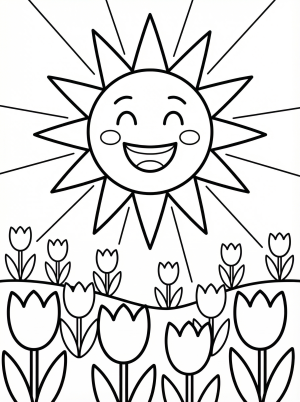
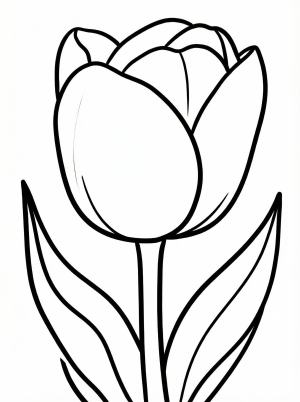
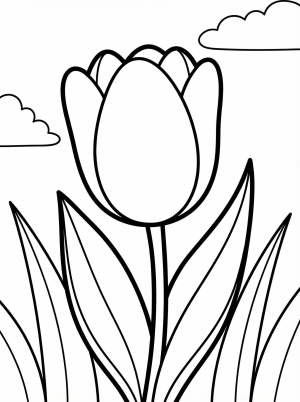
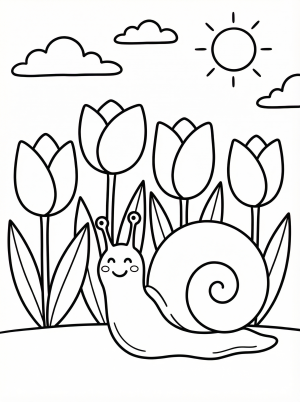
Welcome to our exquisite collection of tulip coloring pages, where artistic expression blossoms alongside botanical discovery. These beautifully designed printables offer a unique opportunity for children to engage with nature's artistry while developing crucial cognitive and motor skills. Immerse young learners in the captivating world of tulips today.
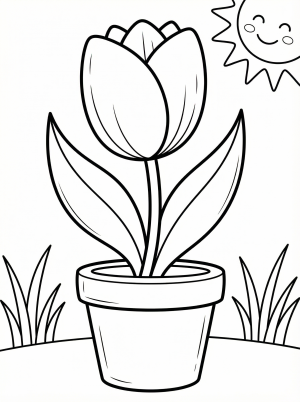
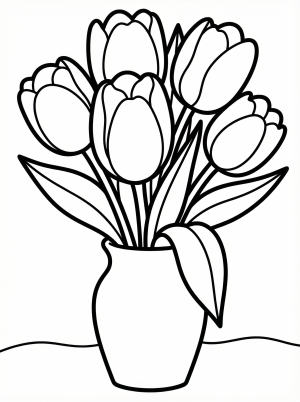
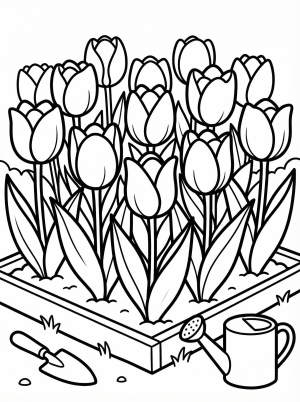
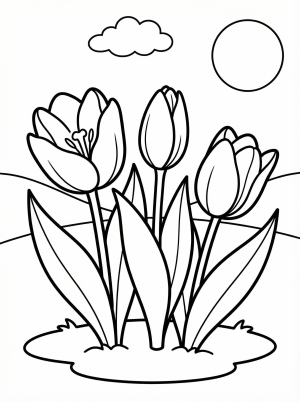


Educator's Guide to Tulips Coloring Pages
The Educational Power of Tulips
Tulips, with their iconic cup shaped blooms and vast array of colors, offer a captivating entry point into botanical education and artistic exploration for children of all ages. Engaging with tulip themed coloring pages provides a fantastic opportunity to introduce young learners to plant science concepts, fostering an early appreciation for the natural world. Children can learn about the different parts of a flower, understanding the role of petals, stems, and leaves, while also discovering the life cycle of a plant from a bulb to a blooming flower. Furthermore, tulips boast a rich history and cultural significance, particularly in the Netherlands, offering avenues for discussions about geography, history, and international traditions. The very act of choosing colors and completing these pages enhances a child's visual discrimination and critical thinking as they decide how to represent these beautiful blossoms accurately or imaginatively, building a foundation for observation and scientific inquiry.
Classroom & Home Learning Ideas
Beyond simply coloring, these tulip worksheets can be transformed into robust educational activities for both classroom and home environments. One creative approach involves using the completed coloring pages as a foundation for a botanical identification game, where children match their colored tulips to actual photographs of various tulip species, identifying differences in petal shape or variegation. Teachers might also consider incorporating these pages into a lesson about color theory, encouraging students to experiment with warm and cool colors or to create monochromatic studies of a single tulip, thereby deepening their understanding of hue and value. Another enriching activity involves encouraging children to research the cultural significance of tulips in different countries, perhaps creating a small presentation or a short story inspired by their findings and their artwork. Furthermore, these pages can serve as visual aids when discussing the seasons, particularly spring, allowing children to connect their artistic output with real world natural cycles and the wonder of new growth.
Artistic Development
Engaging with tulip coloring pages offers excellent opportunities for developing advanced artistic techniques and fine motor control. To add depth and realism to their tulips, children can be encouraged to explore shading, using darker tones at the base of petals or in areas where petals overlap to create a three dimensional effect. Another valuable technique involves color blending, carefully combining two or more shades of the same color, for instance, a light pink with a darker rose, to achieve smooth transitions and a more vibrant, lifelike appearance for the petals. Furthermore, encouraging attention to detail such as rendering the smooth texture of the petals versus the more fibrous texture of the stem and leaves can significantly enhance a child's observational drawing skills. Experimenting with various coloring mediums, including crayons, colored pencils, or even watercolors, allows children to discover different artistic effects and textures, further broadening their creative repertoire and refining their dexterity and control over their chosen tools.
Coloring Tips & Techniques
- 1Encourage children to observe real tulips or high quality images to inspire realistic color choices and details.
- 2Discuss the parts of a tulip plant stem, petals, leaves to build botanical vocabulary during coloring.
- 3Suggest using various shades of a single color to add depth and dimension to the tulip blooms and leaves.
- 4Pair coloring with a short story or fact about tulips to integrate literacy and scientific knowledge.
- 5Challenge children to draw a background for their colored tulip, placing it in a garden or natural setting.
Our Quality Guarantee to Educators
We believe classroom resources should be high-quality and stress-free. Every worksheet on WorksheetSource is personally printed and tested by our team to ensure it fits standard 8.5" x 11" paper with clean, sharp outlines.
Frequently Asked Questions
What makes tulips coloring pages particularly good for young learners?
Tulip coloring pages are exceptional for young learners due to their clear, recognizable shapes and vibrant potential. They provide a perfect blend of artistic freedom and structured learning, enhancing fine motor skills, encouraging color recognition, and sparking curiosity about the natural world. The distinct form of a tulip is easy for children to identify and color, building confidence and a foundational understanding of botanical structures.
How do these tulip coloring activities specifically support child development?
These tulip coloring activities significantly support child development across multiple domains. They enhance fine motor skills and hand eye coordination vital for writing and daily tasks, while also fostering creativity and self expression. Furthermore, they promote concentration and focus, aid in color recognition, and introduce basic botanical concepts, thereby nurturing an early appreciation for science and nature. The process of completing a page also boosts a child's sense of accomplishment and pride.
Tulips Coloring in English