
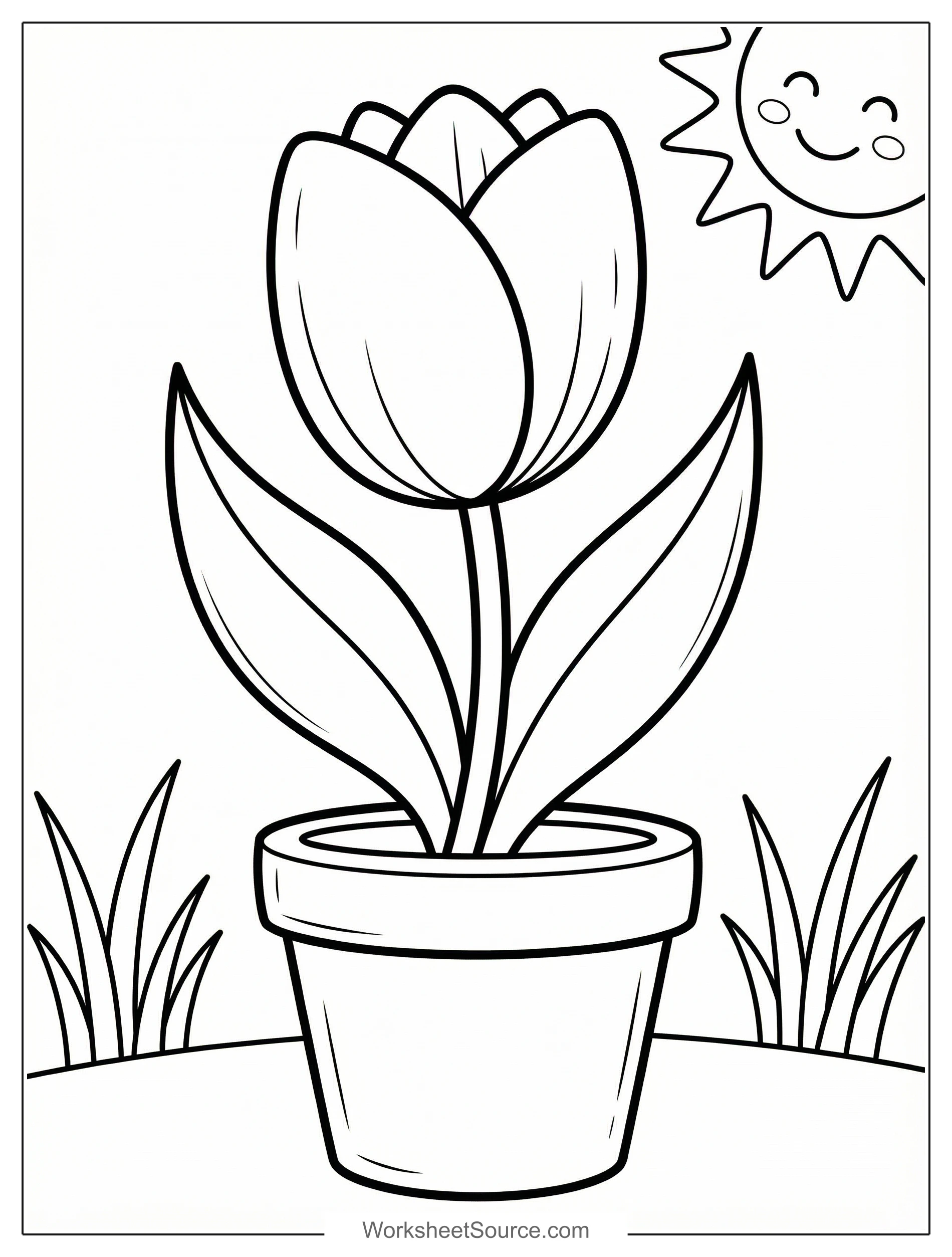
Tulip In Pot Printable
Ignite creativity and fine motor skills with our beautiful tulip in a pot coloring page. A delightful printable activity, perfect for young artists to explore nature and color recognition at home or school.
Instant AccessGet the PDF
Get the Flowers bundle!
93 worksheets for $2.99
Or get individual sheets — completely free.
View bundle details
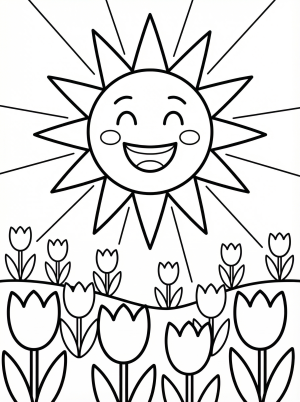
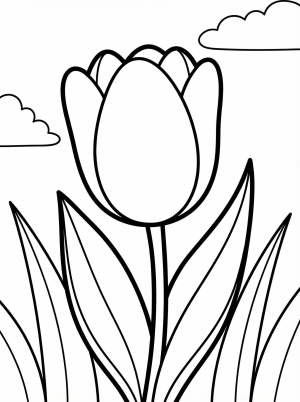
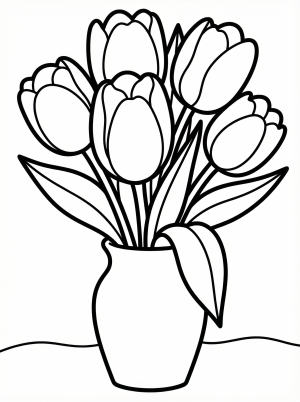
- Resolution
- 300 DPI
- Difficulty
- Easy
Educator's Guide & Activity Ideas
Did you know that tulips, with their vibrant colors and elegant shapes, originally hailed from Central Asia before becoming synonymous with the Netherlands? These cheerful blooms are actually part of the lily family, and while often seen in sprawling garden beds, they adapt wonderfully to container growing. Cultivating a beautiful flower in a pot allows us to observe its full life cycle up close, from the sturdy stem emerging to the breathtaking unfurling of its petals. This unique adaptation makes them a fantastic subject for exploring botany and horticulture in a compact, accessible way, even for young children. Their structured form also provides an excellent foundation for artistic expression.
Engaging with a potted plant coloring sheet offers numerous developmental benefits for children. Beyond fostering creativity and artistic expression, the intricate details of a growing flower support the refinement of fine motor skills and hand-eye coordination as children carefully color within the lines. It also serves as a gentle introduction to botanical observation, helping young learners notice different plant parts like petals, leaves, stems, and the pot itself. This focused activity encourages patience and concentration, essential skills for both academic success and everyday tasks. Furthermore, discussing plant growth and care during this creative process enhances vocabulary and scientific literacy.
Teachers can integrate this spring flower coloring sheet into a science unit by having students label the parts of the plant after coloring. Follow up with a real observation project, perhaps planting a daffodil bulb in a clear pot in the classroom to watch its root and shoot development. Parents can transform this into a fun home-learning game by asking children to identify all the colors they used on their tulip drawing and then find those same colors in real flowers outdoors or in a picture book. You might also encourage them to draw what they think the tulip looked like before it bloomed, sparking imaginative thinking and reinforcing the concept of plant growth.
Curriculum Standard Alignment
This activity supports early childhood science standards by introducing plant life and observation skills, and enhances literacy through vocabulary development related to nature and art. It also promotes fine motor control crucial for early writing readiness.
Discussion Starters for Teachers & Parents
Imagine your tulip could talk. What story would it tell about growing in its pot?
What do you think is happening inside the pot that helps the tulip stand up tall and bloom so beautifully?
If you were a tiny bug visiting this tulip, what would be the most interesting part of it to explore?
Coloring Tips & Techniques
Consider a vibrant palette of reds, yellows, or pinks for the tulip petals, perhaps blending a lighter shade at the edges for a soft glow. Remember to add subtle green variations to the leaves and stem to show their natural textures. For the pot, try earthy browns or terra cotta tones, imagining light falling from one direction to create simple shadows.
Educational Milestones
- Fine Motor PrecisionRefines small muscle movements in the hands and fingers, essential for writing readiness.
- Spatial AwarenessHelps children understand boundaries, lines, and shapes in a structured environment.
Recommended For
Preschool & Elementary Learners
Frequently Asked Questions
Our Quality Guarantee to Educators
We believe classroom resources should be high-quality and stress-free. Every worksheet on WorksheetSource is personally printed and tested by our team to ensure it fits standard 8.5" x 11" paper with clean, sharp outlines.
Classroom & Personal Use
Yes! All our coloring pages are free for personal, classroom, and homeschool use. Print as many as you need.
Paper & Print Sizes
Every design is formatted for US Letter (8.5 x 11"). We recommend printing at 100% scale for best line crispness.
Digital Tablet Use
Absolutely. Our PDFs work perfectly in digital coloring apps like Procreate, GoodNotes, and similar tablet software.