
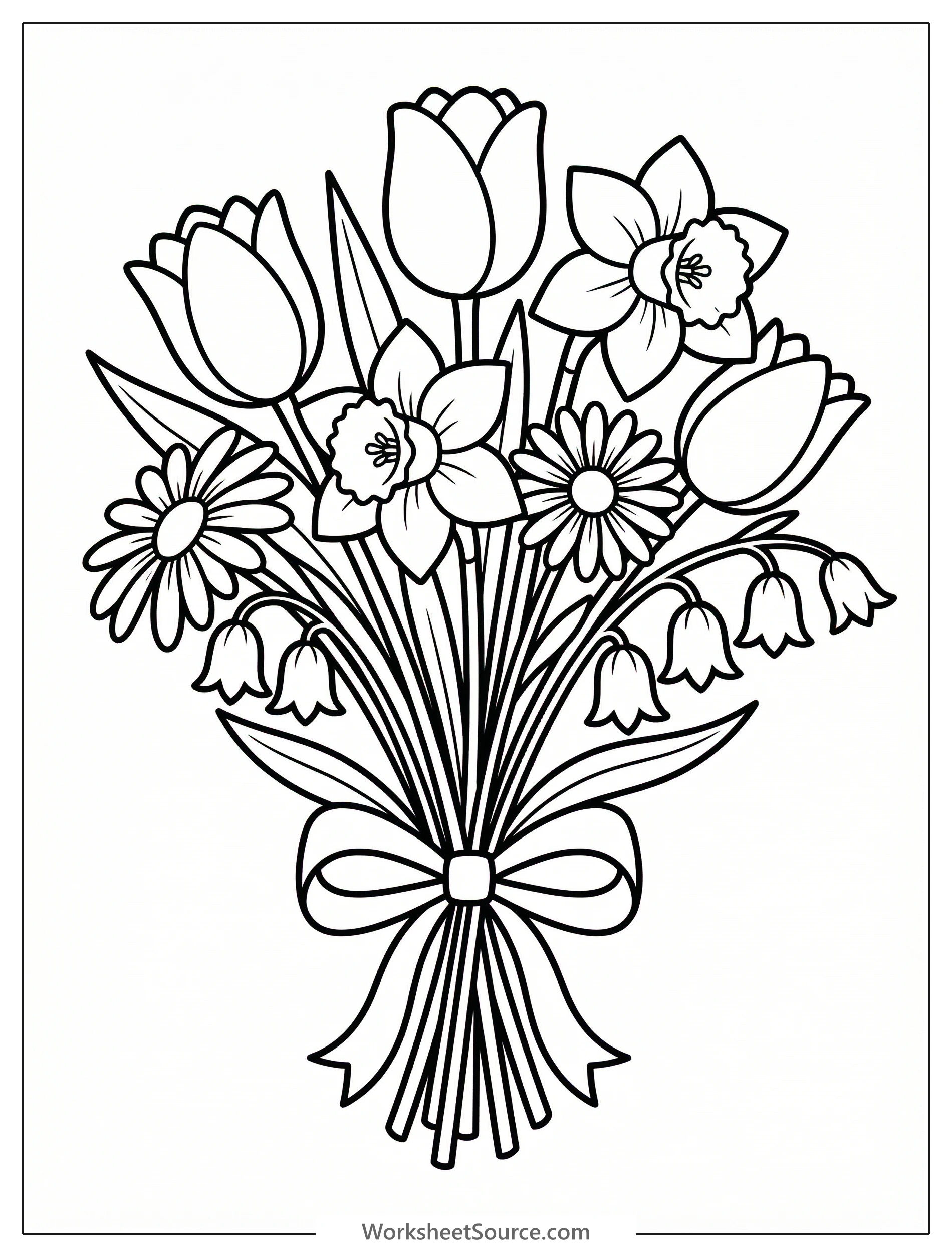
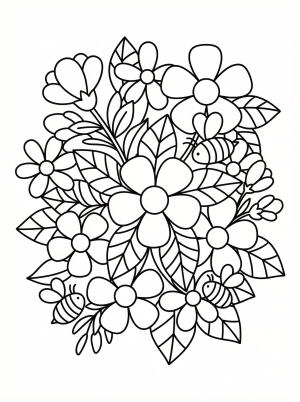
Bouquet of mixed spring flowers Printable
Discover joyful learning with a beautiful spring flower bouquet coloring page. This activity boosts fine motor skills, creativity, and color recognition for young learners, making it perfect for home or classroom fun.
Instant AccessGet the PDF
Get the Seasons bundle!
158 worksheets for $4.99
Or get individual sheets — completely free.
View bundle details
- Resolution
- 300 DPI
- Difficulty
- Easy
Educator's Guide & Activity Ideas
Spring brings a magnificent burst of life, and few things capture its essence quite like a diverse bouquet of flowers. Did you know that different spring flowers bloom at various times, creating a continuous display of beauty from early March through May? A vibrant mix often includes cheerful tulips, sunny daffodils, fragrant hyacinths, and delicate irises, each contributing its unique shape and color to a delightful arrangement. These blossoms not only signal warmer weather, but also play a vital role in ecosystems, providing essential nectar for early pollinators like bees and butterflies as nature awakens from its winter slumber.
Engaging with creative activities like coloring a detailed floral design offers numerous developmental advantages for young learners. It significantly refines fine motor skills, strengthening the small muscles in hands and fingers crucial for handwriting and daily tasks, while also boosting hand-eye coordination. This focused activity cultivates patience and concentration, helping children develop longer attention spans. Furthermore, coloring provides a wonderful opportunity for self-expression, allowing them to explore color theory, understand shades and tints, and unleash their artistic imagination within a structured yet open-ended framework, fostering both cognitive growth and emotional well-being.
For educators, integrating this activity into classroom lessons can be seamless. A teacher might suggest a 'Spring Flower Identification' game, where children identify and discuss different flowers within their bouquet before or after coloring them, perhaps even researching their names and characteristics. At home, parents can transform coloring into an exciting 'Nature's Rainbow' scavenger hunt. First, children can color their blossoms using a wide array of shades, and then they can go outside or look through books to find real flowers matching their chosen colors. This combines artistic fun with a practical understanding of botany and color recognition, making learning an immersive and memorable experience for everyone.
Curriculum Standard Alignment
This engaging activity supports early learning standards in visual arts for creativity and color recognition, science for introducing botany and natural cycles, and fine motor development for prewriting skills.
Discussion Starters for Teachers & Parents
If you could pick one flower from your bouquet to give to someone special, which one would it be and why did you choose that particular flower?
Imagine this bouquet is in a magical garden. What sounds would you hear, what smells would you notice, and what kind of creatures might visit these beautiful flowers?
How do you think these different flowers help each other grow and stay healthy when they are all together in one beautiful bouquet?
Coloring Tips & Techniques
Encourage vibrant expressions by using a cheerful palette of pastel pinks, sunny yellows, and fresh greens for your spring bouquet. Try coloring the flowers with bright, solid hues first, then add tiny dots or stripes for texture and visual interest. Remember to use lighter shades for petals facing upwards and darker tones for those tucked beneath others to create depth.
Educational Milestones
- Fine Motor PrecisionRefines small muscle movements in the hands and fingers, essential for writing readiness.
- Spatial AwarenessHelps children understand boundaries, lines, and shapes in a structured environment.
Recommended For
Preschool & Elementary Learners
Frequently Asked Questions
Our Quality Guarantee to Educators
We believe classroom resources should be high-quality and stress-free. Every worksheet on WorksheetSource is personally printed and tested by our team to ensure it fits standard 8.5" x 11" paper with clean, sharp outlines.
Classroom & Personal Use
Yes! All our coloring pages are free for personal, classroom, and homeschool use. Print as many as you need.
Paper & Print Sizes
Every design is formatted for US Letter (8.5 x 11"). We recommend printing at 100% scale for best line crispness.
Digital Tablet Use
Absolutely. Our PDFs work perfectly in digital coloring apps like Procreate, GoodNotes, and similar tablet software.
Explore the entire library
Bouquet of mixed spring flowers Coloring in English