
Rivers & Waterfalls Coloring
Embark on an enriching journey through the world's most captivating water formations with our expertly curated Rivers and Waterfalls coloring pages. These premium printables offer more than just creative expression; they provide a powerful gateway to understanding vital geographical concepts and ecological principles. Dive into a learning experience that inspires wonder and deepens appreciation for nature's dynamic artistry.
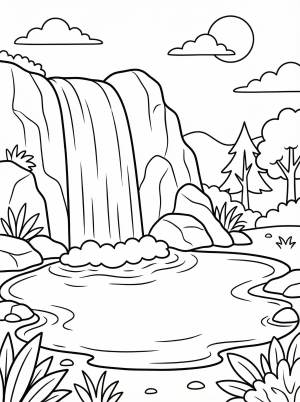
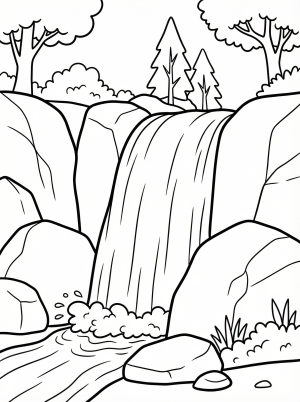
Educator's Guide to Rivers & Waterfalls Coloring Pages
The Educational Power of Rivers & Waterfalls Rivers and waterfalls are not merely beautiful natural phenomena; they serve as profound educational tools, unlocking a deeper understanding of our planet's geography, hydrology, and ecological systems. Rivers, as dynamic conduits of fresh water, sculpt landscapes through erosion and deposition, creating fertile plains and dramatic canyons while sustaining vast plant and animal life. Children engaging with these images can grasp concepts like a river's source, its journey, and the intricate food webs it supports. Understanding the critical role rivers play in human civilization, from providing water and transportation to powering industries, instills an early appreciation for natural resources and conservation. Waterfalls, formed when rivers plunge over steep inclines, exemplify geology's powerful forces and hydrodynamics, showcasing the constant interplay between water and rock. Exploring these features provides a tangible link to abstract scientific principles, fostering curiosity and critical thinking about the natural world. This engagement refines fine motor skills, enhances hand eye coordination, and improves concentration, all while developing an imaginative connection to nature.
Classroom & Home Learning Ideas Beyond the simple act of coloring, these river and waterfall pages can transform into rich educational activities within both classroom and home environments. One engaging approach involves using the completed artwork as a starting point for geographical exploration; children could research famous rivers like the Nile or the Amazon, or iconic waterfalls such as Niagara Falls or Angel Falls, then locate them on a world map. Another creative endeavor might be to encourage students to imagine and write a short story or poem from the perspective of an animal living along a riverbank or near a waterfall, thus integrating literacy skills with scientific understanding. Furthermore, teachers and parents could introduce a scientific element by having children identify different parts of a river system within their colored page, discussing how tributaries flow into a main channel or how erosion shapes the riverbed. An additional suggestion involves turning the coloring session into an opportunity to discuss the water cycle, tracing how water from rain contributes to rivers and waterfalls, eventually evaporating and returning to the atmosphere.
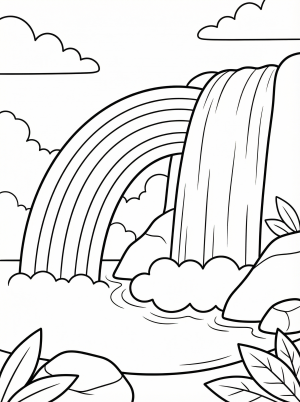
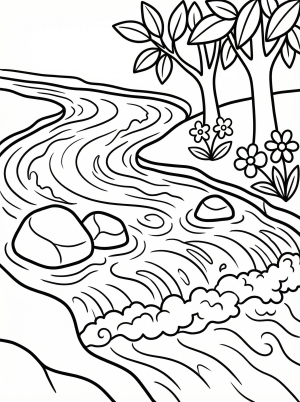
Artistic Development Coloring rivers and waterfalls offers a magnificent canvas for cultivating advanced artistic techniques and understanding visual representation. To convey the dynamic energy of moving water, artists can experiment with various shades of blue and green, using lighter hues where sunlight hits the surface and deeper tones for shadows and depth. For waterfalls, focusing on the vertical lines of falling water and the mist around the base can create a sense of height and power. Children can learn to blend colors seamlessly to show transitions in water depth or the subtle variations in rock texture, which helps to create a more realistic and compelling image. Encouraging the use of different pressure with coloring tools, whether crayons, colored pencils, or even watercolors, allows for exploration of light and shadow, adding volume and three dimensionality to the scene. Discussing perspective, such as how objects appear smaller in the distance or how reflections are mirrored on the water's surface, introduces fundamental art principles that enhance visual literacy and artistic expression. This deliberate engagement transforms coloring into a foundational art lesson, developing keen observational skills and a sophisticated understanding of composition.
Coloring Tips & Techniques
- 1Discuss the complete water cycle, identifying its various stages as depicted or implied in the coloring pages.
- 2Challenge children to locate and label famous rivers or waterfalls on a world map after coloring.
- 3Encourage research into the unique ecosystems and wildlife supported by specific rivers or waterfalls.
- 4Experiment with different art mediums like watercolor pencils or pastels to achieve varied water textures and effects.
- 5Promote careful observation of real world water movement and reflections during outdoor excursions.
Our Quality Guarantee to Educators
We believe classroom resources should be high-quality and stress-free. Every worksheet on WorksheetSource is personally printed and tested by our team to ensure it fits standard 8.5" x 11" paper with clean, sharp outlines.
Frequently Asked Questions
How are rivers and waterfalls formed?
Rivers typically begin as tiny streams from sources like melting snow, rainfall, or springs, flowing downhill and carving channels through the landscape over time. They grow as they merge with other streams, eventually becoming larger bodies of water. Waterfalls occur when a river flows over a sudden drop or a vertical cliff, often where softer rock has eroded away more quickly than harder rock layers upstream, creating a spectacular plunge.
How do these coloring pages help with my child's development?
These coloring pages provide multifaceted developmental benefits. They significantly enhance fine motor skills and hand eye coordination as children meticulously color within lines. Cognitively, they foster focus and concentration, while sparking curiosity about geography and natural science. Furthermore, the act of choosing colors and interpreting the scene encourages creative expression and imaginative thinking, connecting children to nature in a tangible way.
Rivers & Waterfalls Coloring in English