
Rainbows Coloring
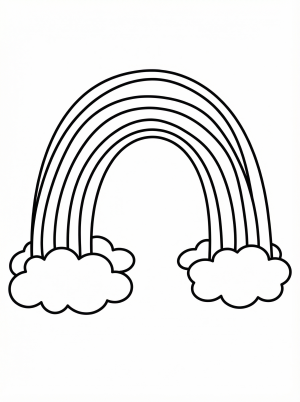
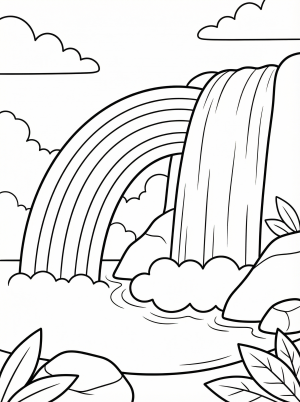
Unlock a world of vibrant learning with our meticulously curated collection of free printable rainbow coloring pages. These expertly designed resources offer a brilliant gateway to exploring color theory, natural phenomena, and artistic expression, fostering creativity and educational development.
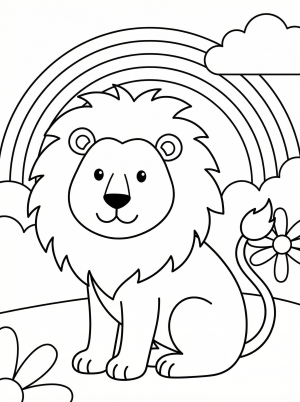
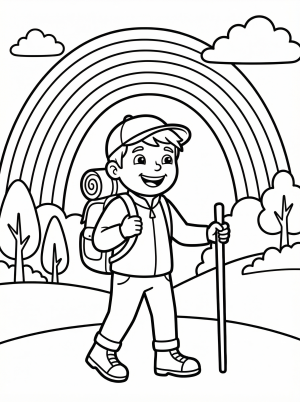
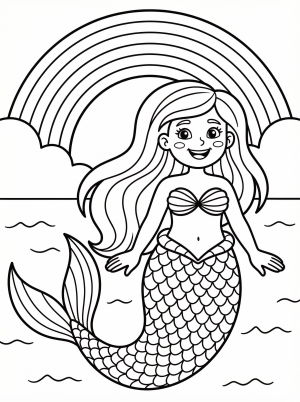
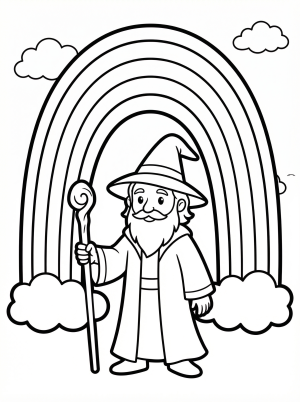
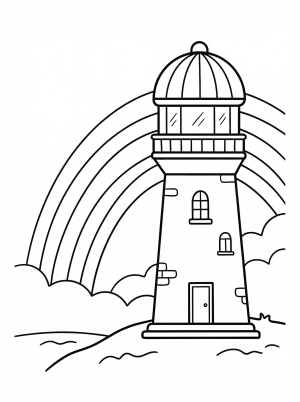
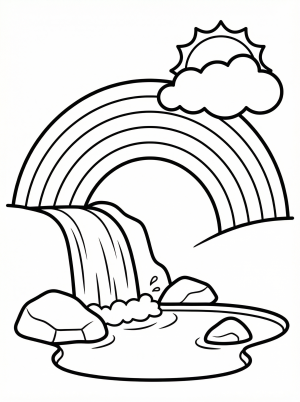

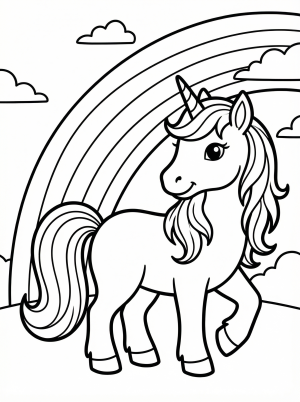
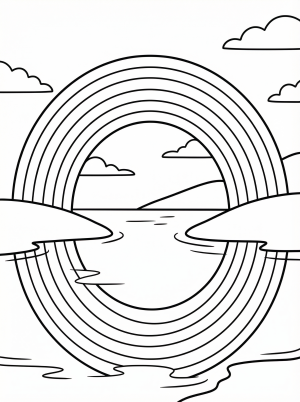


Discover more Nature themes
Continue your creative journey with these other popular collections within the Nature archive.
Educator's Guide to Rainbows Coloring Pages
The Educational Power of Rainbows Rainbows profoundly captivate children with their dazzling array of colors, offering an exceptional entry point into various scientific and artistic concepts. Scientifically, a rainbow beautifully illustrates light refraction and reflection through countless water droplets, transforming sunlight into a spectacular spectrum. Engaging with rainbow themed activities naturally introduces young learners to primary and secondary colors, teaching them about color mixing, sequences, and the comprehensive spectrum in a highly memorable way. Furthermore, the transient beauty of a rainbow sparks curiosity about meteorological phenomena and the wonders of the natural world, fostering an appreciation for scientific inquiry and critical observation. This simple coloring activity thus evolves into a powerful pedagogical tool for foundational learning, seamlessly blending artistic expression with elementary physics and environmental awareness.
Classroom & Home Learning Ideas Beyond basic coloring, these thoughtfully designed rainbow pages can readily transform into dynamic educational tools for both classroom and home. One creative approach involves using completed pages as vibrant prompts for imaginative storytelling, where children invent tales about where their colorful rainbow might lead or what treasures lie at its end, enhancing language development, narrative construction, and imaginative thinking. Teachers might also encourage students to identify and accurately label each distinct color of the rainbow, reinforcing precise color recognition and fundamental spelling skills. A further engaging, hands on activity is to pair the coloring page with a simple science experiment, perhaps demonstrating how to create a mini rainbow effect using a household prism or a glass of water in direct sunlight, directly connecting artistic output with tangible, real world scientific observation. For youngest learners, matching real world objects to the colors they have just colored can serve as an exceptionally effective method to solidify their understanding of color within their immediate environment, blending visual art with practical, tactile learning experiences.
Artistic Development Engaging with rainbow coloring pages provides profound opportunities for significant artistic development, moving children beyond mere color filling to cultivate refined artistic skills and sensibilities. Encouraging young artists to experiment thoughtfully with various artistic mediums such as wax crayons, vibrant colored pencils, or delicate watercolors on their rainbow themed pages helps them understand how different tools create unique textures and distinct color effects. Providing gentle guidance on blending colors seamlessly, particularly focusing on the gradual and harmonious transition between adjacent hues, teaches crucial techniques in advanced color theory and precise application. Discussing concepts such as the interplay of light and shadow, and explaining how these fundamental elements affect color vibrancy, dramatically elevates their artistic perception, prompting them to consider depth, dimension, and perspective even within a two dimensional drawing. Furthermore, children can be encouraged to explore intricate patterns within the rainbow structure, perhaps ingeniously adding their own unique designs or subtle gradients, which naturally fosters inherent creativity and profound personal expression within a structured framework, simultaneously developing essential fine motor skills and cultivating a keen eye for intricate detail.
Coloring Tips & Techniques
- 1Discuss the science of rainbows: light, water, and prism effect.
- 2Encourage color mixing experiments using various art mediums.
- 3Use the completed page as a storytelling prompt for creative writing.
- 4Match colored sections to real life objects to reinforce color recognition.
- 5Explore gradients and blending techniques for artistic development.
Our Quality Guarantee to Educators
We believe classroom resources should be high-quality and stress-free. Every worksheet on WorksheetSource is personally printed and tested by our team to ensure it fits standard 8.5" x 11" paper with clean, sharp outlines.
Frequently Asked Questions
What are the best ways to explain how rainbows form to children?
Explaining rainbow formation can be simplified by focusing on sunlight and raindrops. Tell children that sunlight is actually made of many colors, and when it shines through tiny raindrops, those drops act like tiny prisms, splitting the light into all the colors we see. A fun demonstration involves spraying water with a hose on a sunny day to create a personal mini rainbow, making the science tangible and exciting.
How do these help with development?
Rainbow coloring pages significantly aid development by improving fine motor skills through precise coloring, enhancing color recognition and sequencing abilities, and fostering creativity and imaginative thinking. They also serve as a gateway to understanding basic science concepts like light and weather, making learning a multi sensory experience that builds foundational knowledge and artistic confidence.
Rainbows Coloring in English