
Parks Coloring
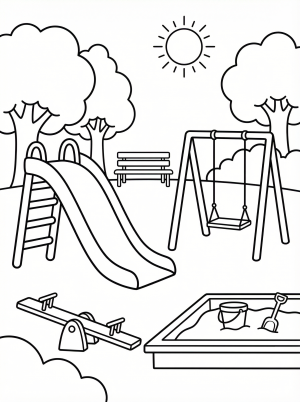
Step into the wondrous world of nature with our meticulously crafted Parks coloring pages. This educational resource invites children to explore diverse outdoor environments while fostering creativity, environmental appreciation, and fine motor skills.


Educator's Guide to Parks Coloring Pages
The Educational Power of Parks Engaging with park themed coloring pages offers children a multifaceted educational experience, extending far beyond simple artistic expression. These activities inherently cultivate a deeper appreciation for nature and the vital role parks play in both local communities and global ecosystems. As children color scenes depicting national forests, urban gardens, or playgrounds, they develop a foundational understanding of various natural habitats and recreational spaces. This visual engagement can spark curiosity about biodiversity, encouraging them to learn about the plants and animals that inhabit these environments. Furthermore, the act of coloring requires focused attention and concentration, enhancing cognitive skills crucial for academic success. Children learn to observe details within the illustration, identify different elements of a landscape, and make choices about color representation, all of which contribute to their visual literacy and critical thinking abilities. By exploring these pages, young learners indirectly absorb lessons about conservation and stewardship, recognizing the beauty and importance of protecting these natural treasures for future generations.
Classroom & Home Learning Ideas Integrating park coloring pages into learning activities can transform a simple art project into a rich educational journey for both classroom and home settings. One creative approach involves using the completed coloring pages as a visual prompt for research projects where children can investigate a specific park featured in their artwork or a type of park habitat. For instance, after coloring a national park scene, a child might research Yellowstone or Yosemite, learning about its unique geography or wildlife. Another engaging idea is to encourage storytelling; children can develop narratives about the people, animals, or adventures taking place within their colored park scene, articulating their ideas verbally or in written form to enhance language and imaginative skills. Teachers might also consider incorporating these pages into a design challenge where students are tasked with imagining and drawing their own ideal park based on the elements they've colored, which promotes creativity and problem solving. Furthermore, these pages provide an excellent starting point for discussions about ecological concepts such as ecosystems, food chains, or the importance of clean water and air, helping children connect art with vital scientific principles and environmental awareness.
Artistic Development Coloring park scenes provides a fertile ground for developing sophisticated artistic techniques and a deeper understanding of visual aesthetics. Professional artists often emphasize the importance of observing light and shadow to create dimension, a principle young colorists can begin to grasp by consciously deciding which areas of a tree or mountain might be brighter or darker. Layering colors is another advanced technique; instead of applying a single flat color, children can learn to build up shades and tones using multiple crayon or pencil strokes, creating textures for grass, bark, or water that appear more realistic and vibrant. For example, using a base green with layers of yellow and dark green can make foliage look much more dynamic. Blending colors, particularly with colored pencils or soft pastels, allows for smooth transitions and gradients, perfect for depicting a sunset over a park lake or the gentle contours of rolling hills. Experimenting with various art mediums, such as crayons for bold strokes, colored pencils for fine detail, or markers for intense hues, further broadens a child's artistic repertoire and encourages them to discover different effects. Ultimately, by approaching these park pages with an artist's eye, children develop not only technical skill but also a more nuanced appreciation for the visual world around them, refining their ability to translate observation into artistic expression.
Coloring Tips & Techniques
- 1Encourage observation: Discuss the plants, animals, and features seen in real parks or depicted in the pages.
- 2Extend learning: Research the specific park or ecosystem represented after coloring is complete.
- 3Foster storytelling: Prompt children to create narratives about the characters or activities within their colored park scene.
- 4Discuss conservation: Use the pages as a springboard for conversations about protecting natural spaces.
- 5Vary art supplies: Introduce different mediums like colored pencils for detail or pastels for soft textures to enhance artistic exploration.
Our Quality Guarantee to Educators
We believe classroom resources should be high-quality and stress-free. Every worksheet on WorksheetSource is personally printed and tested by our team to ensure it fits standard 8.5" x 11" paper with clean, sharp outlines.
Frequently Asked Questions
What are the best ways to incorporate these park coloring pages into a science lesson?
These park coloring pages are excellent springboards for science lessons. Teachers can use them to introduce concepts like local ecosystems, native flora and fauna, and basic geography by having children identify and label different elements in their colored scenes. They can also serve as visual aids for discussions on biodiversity, the water cycle, or the importance of green spaces for urban environments. Pairing the coloring activity with research on specific park types or conservation efforts will significantly enhance scientific understanding and environmental awareness.
How do these help with development?
These coloring pages provide numerous developmental benefits. They significantly enhance fine motor skills and hand eye coordination as children learn to grip coloring tools and stay within lines. Cognitively, they foster color recognition, creative expression, and visual discrimination. Furthermore, by engaging with park themes, children develop an early appreciation for nature, environmental stewardship, and imaginative play, which are crucial for holistic growth and emotional well being.
Parks Coloring in English