
Monkeys Coloring
Step into the fascinating world of primates with our meticulously curated collection of monkey coloring pages. Each sheet is an invitation to explore jungle habitats and learn about these intelligent animals, transforming simple artistic expression into a profound educational journey for young learners.
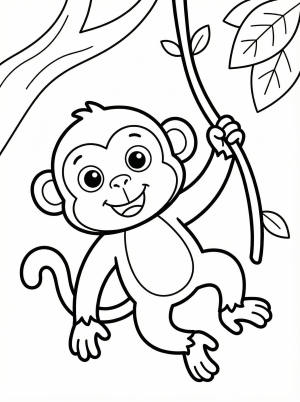


Educator's Guide to Monkeys Coloring Pages
The Educational Power of Monkeys Monkeys, with their diverse species and complex behaviors, offer an incredible gateway into biological sciences and global geography for young minds. Engaging with these creatures through coloring pages naturally sparks curiosity about various ecosystems, from the dense Amazon rainforest to the sprawling African savannas, where different primate families thrive. Children can learn about distinct anatomical features such as prehensile tails in New World monkeys, or the specialized cheek pouches seen in some Old World species, deepening their understanding of animal adaptation and survival. Furthermore, exploring the diets of monkeys, which range from fruits and leaves to insects and small vertebrates, introduces fundamental concepts of food chains and ecological balance, fostering a holistic appreciation for biodiversity.
Classroom & Home Learning Ideas Beyond the simple act of coloring, these monkey pages serve as catalysts for profound learning experiences in both educational and home settings. One highly effective approach involves encouraging children to research a specific monkey depicted on a page, perhaps a vibrant mandrill or an agile spider monkey, then presenting their findings to family or classmates, thereby developing crucial research and public speaking skills. Another engaging activity is to transform the completed coloring page into a diorama, where children can construct the monkey's natural habitat using craft materials, reinforcing their knowledge of environment and climate zones. Moreover, teachers might consider integrating these sheets into a unit on animal classification, asking students to identify characteristics that differentiate monkeys from other primates or mammals, enhancing critical thinking. Lastly, these pages can inspire creative writing; children could invent a story about their colored monkey, detailing its daily adventures, its friends, or the challenges it faces in the wild.
Artistic Development Developing artistic proficiency is an inherent benefit of detailed coloring activities, and these monkey pages present unique opportunities. Encourage children to experiment with color blending to achieve realistic fur textures, perhaps combining browns, grays, and even subtle oranges to capture the varied coats of different monkey species. Guiding young artists to utilize shading techniques, like pressing lighter or harder with their chosen medium, can add remarkable depth and dimension to their artwork, making a flat image appear three dimensional. Furthermore, suggest the incorporation of environmental details in the background, such as lush green leaves, sturdy tree branches, or winding jungle vines, which not only enhances the overall aesthetic but also reinforces understanding of the monkey's natural habitat. Exploring different artistic mediums, from vibrant crayons to soft colored pencils or bold markers, can also teach children about varied effects and textures, broadening their creative toolkit.
Coloring Tips & Techniques
- 1Identify the monkey's unique adaptations on the page.
- 2Locate the monkey’s natural habitat on a world map.
- 3Discuss the sounds or social behaviors of different species.
- 4Read a non fiction book about primates post coloring.
- 5Prompt discussions about jungle conservation efforts.
Our Quality Guarantee to Educators
We believe classroom resources should be high-quality and stress-free. Every worksheet on WorksheetSource is personally printed and tested by our team to ensure it fits standard 8.5" x 11" paper with clean, sharp outlines.
Frequently Asked Questions
What is the difference between a monkey and an ape?
Monkeys typically possess tails, which apes do not. Apes are generally larger, have broader chests, and exhibit more complex brain structures, allowing for greater problem solving abilities. Examples of monkeys include baboons and capuchins, while gorillas, chimpanzees, and orangutans are classified as apes, despite some visual similarities.
How do these help with development?
These monkey coloring pages significantly aid in the development of fine motor skills, enhancing hand eye coordination and precise grip control. The intricate details often found in animal illustrations also encourage focused attention and patience, while choosing colors stimulates creativity and visual discrimination. Furthermore, engaging with the subject matter fosters an early appreciation for zoology and environmental awareness.
Monkeys Coloring in English