
Kawaii Axolotls Coloring Pages
Welcome to the ultimate educational hub for Kawaii Axolotl coloring pages. This curated collection of 49 free, high quality printables offers a delightful fusion of artistic expression and aquatic science, designed to ignite curiosity and develop essential skills in young learners. Prepare to embark on an engaging journey into the charming world of these unique amphibians through creative exploration.
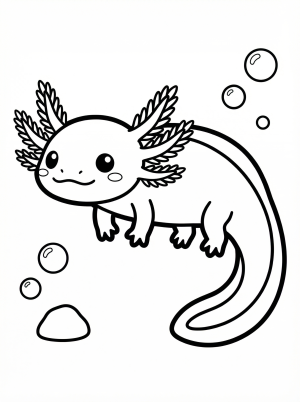

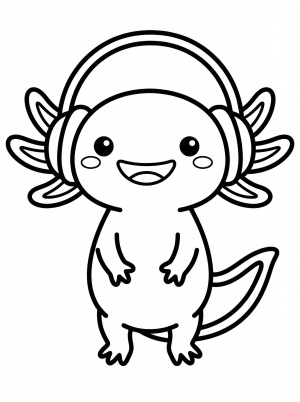
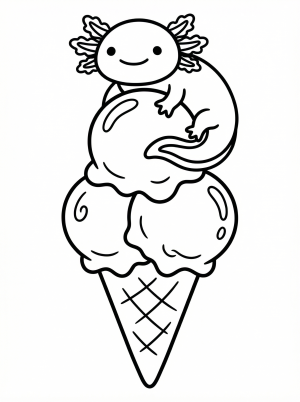
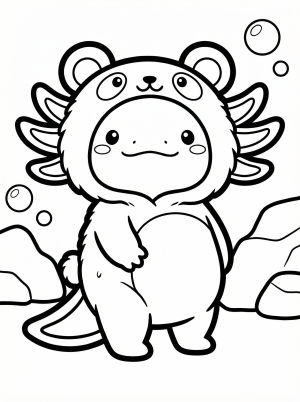
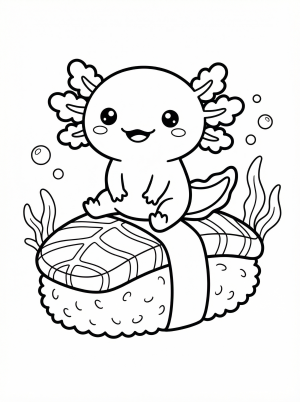




Educator's Guide to Kawaii Axolotls Coloring Pages
The Educational Power of Kawaii Axolotls
Engaging with Kawaii Axolotl coloring pages offers a rich educational experience beyond mere artistic pastime. These captivating amphibians, *Ambystoma mexicanum*, are remarkable salamanders known for neoteny, retaining larval features like feathery external gills throughout their lives. Children can learn about the axolotl's natural habitat, the ancient canals of Xochimilco near Mexico City, understanding aquatic ecosystems and the critical need for conservation as these creatures are critically endangered. Furthermore, exploring the "kawaii" aesthetic introduces children to elements of Japanese popular culture, broadening their global awareness. The act of coloring itself sharpens focus, enhances visual discrimination, and aids in developing an early appreciation for biological diversity, turning each stroke into a journey of discovery about a truly extraordinary animal.
Classroom & Home Learning Ideas
These charming axolotl coloring sheets provide a versatile foundation for numerous educational activities. Educators and parents might encourage children to research fascinating axolotl facts, such as their incredible regenerative abilities, before or after coloring their chosen design, naturally integrating science with art. Another creative approach involves crafting a short story or poem inspired by the completed axolotl artwork, fostering literacy and imaginative thought. Students could also design an ideal axolotl habitat, drawing or sketching elements like water plants and rocks, after coloring, thereby applying biological understanding practically. A further valuable activity involves using finished pages for a "show and tell" session, where children articulate what they have learned about axolotls, enhancing public speaking and communication skills. These pages can also serve as a starting point for a comparative study, contrasting the axolotl's unique traits with other amphibians like frogs, deepening their zoological understanding.
Artistic Development
Utilizing Kawaii Axolotl coloring pages provides excellent opportunities for fostering artistic development in young learners. The bold lines typical of the kawaii style naturally encourage children to practice precision and control, refining fine motor skills and hand eye coordination as they endeavor to stay within boundaries. Discussing basic color theory principles, such as choosing warm or cool palettes or identifying complementary colors, adds a layer of sophisticated artistic understanding. Educators can guide children in exploring simple shading techniques by applying lighter and darker pressures, introducing the concept of dimension and form on a two dimensional surface. Experimentation with various coloring mediums, including crayons, colored pencils, or even watercolor paints, can introduce different textures and effects, expanding their artistic toolkit. Encouraging children to observe photographs of real axolotls, noting subtle coloration variations and unique gill structures, while still embracing the whimsical kawaii interpretation, cultivates observational skills and artistic interpretation.
Expert Teaching Tips
- 1Spark Inquiry: Before coloring, prompt children with questions like 'What makes an axolotl special?' to engage their curiosity about this unique creature.
- 2Narrative Creation: Encourage them to invent a short story about their axolotl character's day, fostering imaginative thinking and language development.
- 3Fact Integration: After coloring, challenge children to list three new facts they learned about axolotls, reinforcing biological knowledge.
- 4Color Exploration: Discuss how different color choices evoke moods or represent real axolotl variations, linking art to observational science.
- 5Habitat Design: Have them draw or describe the ideal environment for their axolotl, connecting their artwork to ecological understanding.
Our Quality Commitment
We personally print and test every kawaii axolotls design. We guarantee crisp, bold lines optimized for 8.5" x 11" paper.
Frequently Asked Questions
What exactly is an axolotl and where does it live?
An axolotl is a fascinating type of salamander that lives underwater its entire life, primarily found in the canals of Xochimilco in Mexico City. Unlike most amphibians, it doesn't transform into a land animal; it keeps its feathery gills and aquatic lifestyle even as an adult. They are renowned for their incredible ability to regenerate lost limbs and even parts of their brain or heart, making them a subject of great scientific interest and a truly unique creature on Earth.
How do these coloring pages help with my child's development?
These coloring pages are highly beneficial for several developmental areas. They significantly enhance fine motor skills and hand eye coordination as children carefully color within the lines. Moreover, engaging with the detailed designs fosters concentration and patience. The thematic focus on axolotls also sparks curiosity about biology and conservation, encouraging early scientific inquiry, vocabulary building, and a lifelong love for learning about unique animals and their ecosystems.