
Easter Egg Hunt Coloring
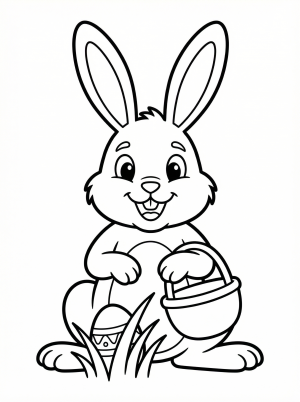
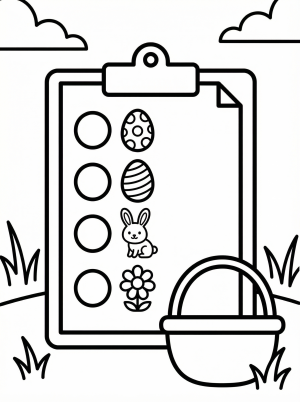
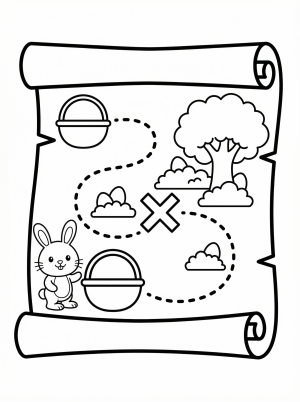
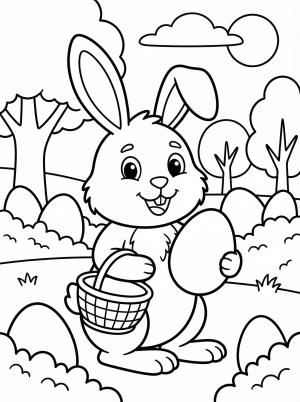
Welcome to our comprehensive hub for Easter Egg Hunt coloring pages, a treasure trove designed to blend festive fun with essential learning. With 55 captivating scenes, these printables offer more than just creative outlets; they are powerful tools for developing crucial skills in young learners. Dive into a world where imagination flourishes and educational growth is celebrated with every stroke of color.
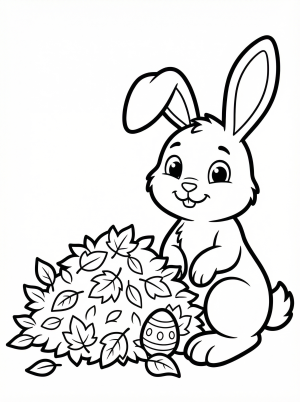
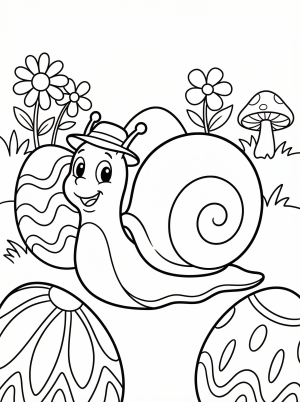
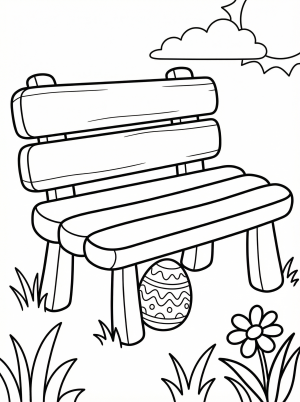
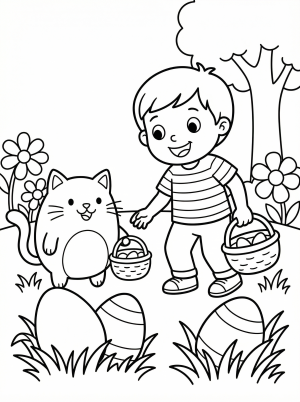
Discover more Easter themes
Continue your creative journey with these other popular collections within the Easter archive.
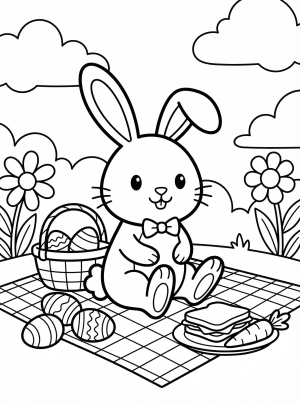
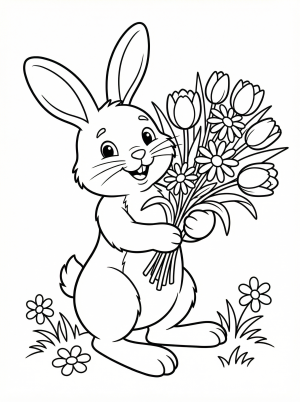
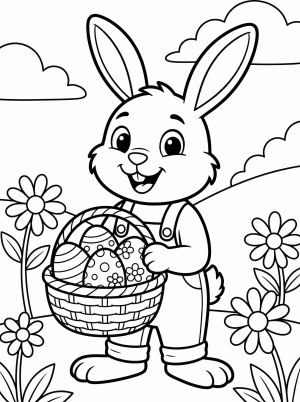
Educator's Guide to Easter Egg Hunt Coloring Pages
The Educational Power of Easter Egg Hunts
Easter Egg Hunt coloring pages offer a unique blend of seasonal joy and profound educational benefits, extending far beyond simple artistic expression. Engaging with these detailed scenes provides children with opportunities to refine their fine motor skills as they carefully manipulate crayons, markers, or paintbrushes within specific lines. This precise control strengthens the small muscles in their hands and fingers, laying crucial groundwork for future writing proficiency and other essential daily tasks.
Beyond physical dexterity, these pages stimulate significant cognitive development. Children practice early counting skills by identifying and tallying eggs, bunnies, and other hidden objects within the illustrations. They develop pattern recognition as they observe and recreate designs on decorated eggs, and they enhance problem solving abilities by strategically choosing colors to make elements stand out or blend in. Furthermore, the vibrant imagery often prompts discussions about spring, animals, and traditions, expanding vocabulary and general knowledge in an organic, enjoyable manner.
Moreover, the act of coloring fosters concentration and patience, encouraging children to focus on a task from start to finish. This sustained engagement is vital for developing attention spans, a fundamental skill for academic success. It also provides a calm, creative outlet that can help regulate emotions, allowing children to express themselves freely while creating something beautiful.
Classroom & Home Learning Ideas
These Easter Egg Hunt coloring pages serve as versatile educational resources for both classroom environments and home based learning. Teachers might incorporate them into a spring themed unit, encouraging students to describe the scenes using descriptive adjectives, thereby enhancing language arts skills. Children could be prompted to create short stories or narratives about what is happening in their colored picture, fostering imagination and storytelling abilities. One creative approach involves having children identify and count specific items like three hidden eggs, four butterflies, or five flowers, seamlessly integrating early math concepts into a fun activity.
Parents can transform coloring time into a valuable learning experience by discussing the colors used and their names, introducing new shades like 'lavender' or 'teal' while coloring a particular egg or flower. They might also encourage their child to imagine where the egg hunt is taking place and what sounds they might hear, stimulating imaginative play and sensory awareness. Furthermore, these pages can be used to explore different art mediums, allowing children to experiment with crayons, colored pencils, watercolors, or even collage materials to add texture and depth to their Easter scenes, promoting artistic exploration and creativity.
Another engaging idea involves using the completed pages as prompts for discussion about the concept of community or sharing, particularly if children are coloring alongside siblings or classmates. They can compare their finished artwork, discussing their unique color choices and interpretations of the scene, which fosters communication and observational skills. The pages can even inspire a real life, scaled down egg hunt in the backyard or living room, connecting the abstract coloring activity to a tangible, exciting experience that reinforces learning through play.
Artistic Development
Mastering coloring techniques on Easter Egg Hunt pages can significantly advance a child's artistic development, moving them beyond simple block coloring. Encourage children to explore different shading techniques to give their images a three dimensional quality. For instance, suggesting they press harder with a crayon on one side of an egg and lighter on the other can create a subtle sense of roundness and depth, making the object appear more realistic and less flat.
Furthermore, focusing on texture can add another layer of sophistication to their artwork. Children might use short, choppy strokes to represent grass or fur on a bunny, and long, smooth strokes for a ribbon or a smooth eggshell. Experimenting with blending colors is another excellent technique; demonstrating how two colors like yellow and blue can be layered to create green on a leaf or a patch of grass can introduce basic color theory in an accessible way, expanding their understanding of how colors interact.
Considering the background and foreground elements separately can also elevate their artistic skills. Prompting children to use softer, lighter colors for objects further away in the scene and brighter, bolder colors for items closer to the viewer helps them grasp perspective. Adding small details, such as patterns on the eggs or tiny flowers in the grass, encourages meticulousness and attention to detail, refining their fine motor control and artistic precision, ultimately nurturing a more sophisticated approach to visual art.
Coloring Tips & Techniques
- 1Encourage storytelling: Ask your child to describe the scene and imagine what happens next after coloring.
- 2Practice counting: Identify and tally hidden eggs, bunnies, or flowers within the colored picture.
- 3Discuss colors and patterns: Name shades, identify patterns on eggs, and explore color mixing possibilities.
- 4Experiment with mediums: Suggest using different art supplies like markers, pencils, or even watercolors for varied effects.
- 5Extend the activity: Connect the coloring to a real life egg hunt or a related spring themed craft project.
Our Quality Guarantee to Educators
We believe classroom resources should be high-quality and stress-free. Every worksheet on WorksheetSource is personally printed and tested by our team to ensure it fits standard 8.5" x 11" paper with clean, sharp outlines.
Frequently Asked Questions
What age group benefits most from Easter Egg Hunt coloring pages?
Easter Egg Hunt coloring pages are wonderfully versatile, offering benefits across a wide age range. Toddlers and preschoolers gain essential fine motor skill development and color recognition. Early elementary students (ages 5 to 8) can enhance their creativity, develop focus, and practice more nuanced coloring techniques, while also using the scenes for storytelling and imaginative play. Even older children may find a relaxing and creative outlet in these festive pages.
How do these Easter Egg Hunt coloring pages specifically aid a child's developmental journey?
These coloring pages significantly contribute to a child's developmental journey by fostering fine motor skills through precise coloring, which supports handwriting readiness. They boost cognitive development via pattern recognition, early counting, and problem solving when choosing colors or interpreting scenes. Furthermore, they stimulate creativity and imagination as children bring the scenes to life with their unique artistic choices, while also providing a calming activity that improves concentration and emotional regulation. Discussions prompted by the images can also expand vocabulary and general knowledge.
Easter Egg Hunt Coloring in English