
Triceratops Dinosaur Coloring Pages
Step into the Mesozoic Era with our captivating collection of Triceratops coloring pages, meticulously designed to spark curiosity and learning in young paleontologists. These free printable resources offer more than just creative outlets; they provide a gateway to understanding ancient life and developing essential skills.
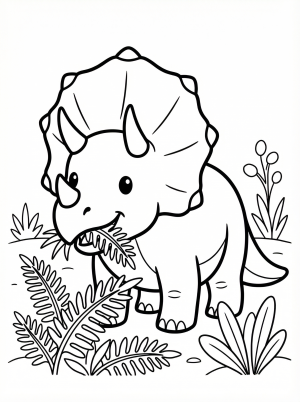
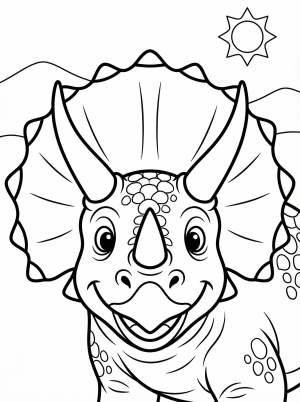
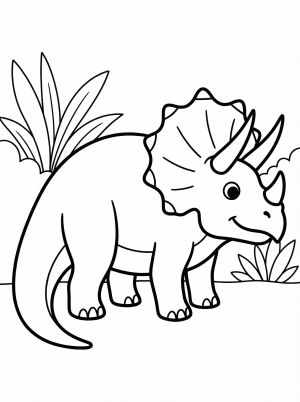
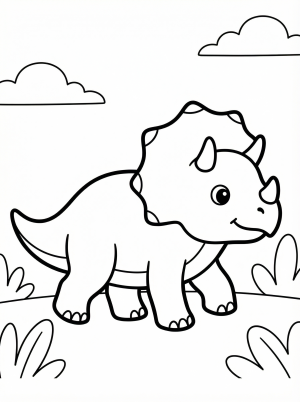
Discover more Dinosaurs themes
Continue your creative journey with these other popular collections within the Dinosaurs archive.
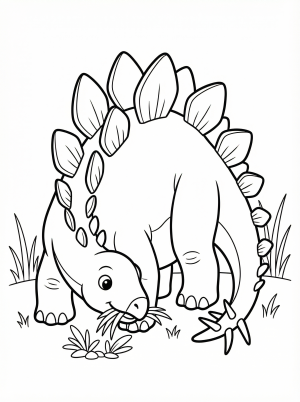
Educator's Guide to Triceratops Dinosaur Coloring Pages
The Educational Power of Triceratops Our Triceratops coloring pages offer a remarkable opportunity to explore one of Earth's most recognizable prehistoric creatures, transforming simple art into a robust learning experience. Children engage directly with paleontology as they identify the distinctive three horns and large bony frill that protected this formidable herbivore. This process introduces them to fundamental scientific concepts such as adaptation and defense mechanisms, while also building a foundational understanding of dinosaur anatomy and classification. Learning about the Triceratops, a prominent inhabitant of the Late Cretaceous period in what is now North America, helps students grasp concepts of deep time and ancient ecosystems. Furthermore, discussions about its diet, consisting primarily of tough plant material, introduce ecological principles like food chains and the role of herbivores within an environment. Acquiring this factual knowledge expands vocabulary related to science and history, fostering a deeper appreciation for natural history and scientific inquiry.
Classroom & Home Learning Ideas These coloring pages extend far beyond a basic artistic activity, serving as versatile tools for both classroom and home learning environments. One creative approach involves using the completed artwork as a starting point for a research project where children identify and write down three new facts they discovered about the Triceratops, thereby reinforcing literacy and critical thinking skills. Teachers might also encourage students to craft a short narrative or story featuring their colored Triceratops, promoting imaginative storytelling and descriptive language development. Another engaging idea is to challenge children to draw or create the natural habitat of the Triceratops around their finished page, integrating elements of botany and geography. Furthermore, the sheets can form part of a comparative anatomy lesson where students analyze and contrast the features of a Triceratops with other dinosaurs, highlighting evolutionary differences and similarities. Finally, consider using the completed pages to construct a simple dinosaur diorama, combining art with spatial reasoning and collaborative project work.
Artistic Development Engaging with Triceratops coloring pages provides a rich platform for developing diverse artistic skills and understanding visual principles. Students can experiment with color mixing to achieve realistic dinosaur skin tones, blending greens, browns, and grays to create depth and authenticity. Professional tips include encouraging the use of varied pressure to create textural effects, making the scales appear rough or smooth, and emphasizing the ruggedness of the horns and frill. Shading techniques can be introduced by guiding children to add darker tones in crevices and lighter hues on raised surfaces, which helps in making the Triceratops appear three dimensional and lifelike. Exploring different artistic mediums, such as crayons, colored pencils, or even watercolors, allows children to understand how each tool impacts the final texture and vibrancy of their artwork. Furthermore, encouraging children to think about integrating a simple background, like ancient ferns or volcanic landscapes, teaches principles of composition and environmental storytelling, enhancing the overall artistic expression.
Expert Teaching Tips
- 1Encourage detailed observation: Prompt children to identify and discuss the purpose of the Triceratops' horns and frill.
- 2Spark geological curiosity: Discuss the Mesozoic Era and what other creatures lived alongside Triceratops.
- 3Vocabulary expansion: Introduce and use scientific terms like 'herbivore,' 'frill,' and 'paleontologist' during coloring.
- 4Integrate storytelling: Ask children to invent a short story about their Triceratops, fostering imaginative play.
- 5Explore color theory: Discuss how different shades of green and brown can create realistic dinosaur skin textures.
Our Quality Commitment
We personally print and test every triceratops dinosaur design. We guarantee crisp, bold lines optimized for 8.5" x 11" paper.
Frequently Asked Questions
What made the Triceratops special among dinosaurs for kids?
The Triceratops was truly unique because of its three prominent horns and its massive bony frill. These features provided defense against predators like Tyrannosaurus rex and made it easily recognizable. Children are often fascinated by its protective adaptations and its herbivorous diet, which involved powerful jaws and a beak for cropping tough plant material. Its name, meaning 'three horned face,' perfectly describes this magnificent creature that roamed ancient North America.
How do these Triceratops coloring pages help with a child's development?
Engaging with Triceratops coloring pages offers multiple developmental benefits for children. It significantly enhances fine motor skills and hand eye coordination as they carefully guide their coloring tools within lines. Furthermore, it fosters creativity and self expression, allowing children to experiment with colors and textures. Cognitive development is also supported through exposure to scientific concepts like paleontology and biology, expanding their vocabulary and understanding of ancient life. These activities provide a calming focus, promoting concentration and mindfulness.