
Frogs Coloring
Dive into the fascinating world of amphibians with our meticulously crafted frog coloring pages. These engaging printables offer much more than just creative fun; they are powerful tools for fostering early learning, fine motor development, and a deeper appreciation for nature's incredible diversity.
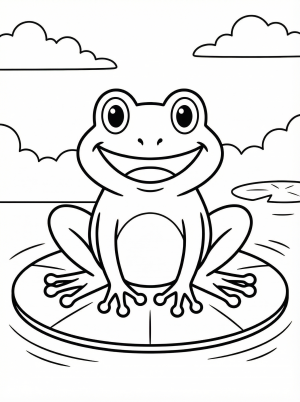


Educator's Guide to Frogs Coloring Pages
The Educational Power of Frogs
Frogs, with their extraordinary life cycles and diverse habitats, offer a captivating gateway into the natural sciences for young learners. Engaging with frog themed coloring pages transcends simple artistic expression by providing a tangible connection to biology and ecology. Children can explore the concept of metamorphosis, observing how a tiny tadpole transforms into a fully grown amphibian. Furthermore, they can learn about different frog species, their unique skin patterns, and the various environments they inhabit, from lush rainforests to serene ponds. This interactive learning experience helps to cultivate observation skills, expand scientific vocabulary, and instills a sense of wonder for the animal kingdom, laying a solid foundation for future scientific inquiry. The act of coloring itself reinforces knowledge retention as children actively process visual information about these amazing creatures.
Classroom & Home Learning Ideas
These frog coloring pages can be integrated into various educational activities both in school and at home, extending their value beyond a mere artistic pursuit. One highly effective approach involves using them to teach the frog life cycle; children can color separate pages depicting eggs, tadpoles, froglets, and adult frogs, then arrange them in the correct sequence to illustrate the complete metamorphosis. Educators might also consider a habitat design activity where children color a frog and then draw or collage a suitable environment around it, perhaps a pond with lily pads or a tropical forest floor, discussing the elements essential for survival. Another engaging idea is to encourage imaginative storytelling; once a frog is colored, children can invent a narrative about their frog's adventures, describing its personality, what it eats, and where it travels, enhancing language and narrative skills. Furthermore, these pages can be used for color recognition and pattern matching exercises, especially if featuring different species with distinct markings.
Artistic Development
Beyond their scientific value, frog coloring pages are excellent for nurturing artistic abilities and refining motor skills. To achieve a more realistic and visually appealing outcome, children can experiment with layering colors; for instance, applying a lighter green base and then adding darker shades or even hints of brown and yellow to create a textured, mottled skin effect common among many frog species. Shading techniques are crucial for giving the frog depth and dimension, moving away from flat, one dimensional images. Children can practice making one side of the frog slightly darker to suggest light falling from a particular direction, thereby enhancing their understanding of light and shadow. Teachers or parents might also introduce the concept of contrasting colors; selecting colors for the background that complement or highlight the frog itself can make the artwork truly pop. Moreover, exploring different coloring mediums, such as crayons for broad strokes, colored pencils for intricate details, or even markers for vibrant, solid hues, allows children to discover various artistic expressions and tool control.
Coloring Tips & Techniques
- 1Discuss frog habitats and life cycles while coloring to boost science literacy.
- 2Encourage imaginative storytelling: 'Where is this frog going? What will it eat?'
- 3Practice color mixing and shading techniques to add realistic texture to the frog's skin.
- 4Turn it into a scavenger hunt: find specific frog species online, then color.
- 5Integrate fine motor skill practice by encouraging precise coloring within lines and small areas.
Our Quality Guarantee to Educators
We believe classroom resources should be high-quality and stress-free. Every worksheet on WorksheetSource is personally printed and tested by our team to ensure it fits standard 8.5" x 11" paper with clean, sharp outlines.
Frequently Asked Questions
What are some interesting facts about frogs that children will enjoy learning?
Frogs are fascinating amphibians known for their incredible jumping abilities and distinctive croaking calls. Children often find their metamorphosis from tiny tadpoles to adult frogs captivating, observing how they change from water dwellers with gills to land animals with lungs. Additionally, explaining how frogs use their sticky tongues to catch insects or how their vibrant skin colors can act as camouflage or a warning provides exciting insights into the natural world.
How do frog coloring pages contribute to a child's developmental growth?
These coloring pages are highly beneficial for cognitive and motor skill development. They significantly enhance fine motor skills and hand eye coordination as children learn to control their coloring tools within specific boundaries. Furthermore, engaging with frog themes introduces basic biological concepts, expanding vocabulary and fostering an early interest in science and nature. The act of choosing colors and interpreting the image also stimulates creativity and self expression.
Frogs Coloring in English