
Peacock Tail Detail Printable
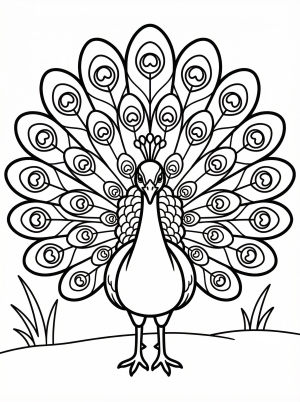
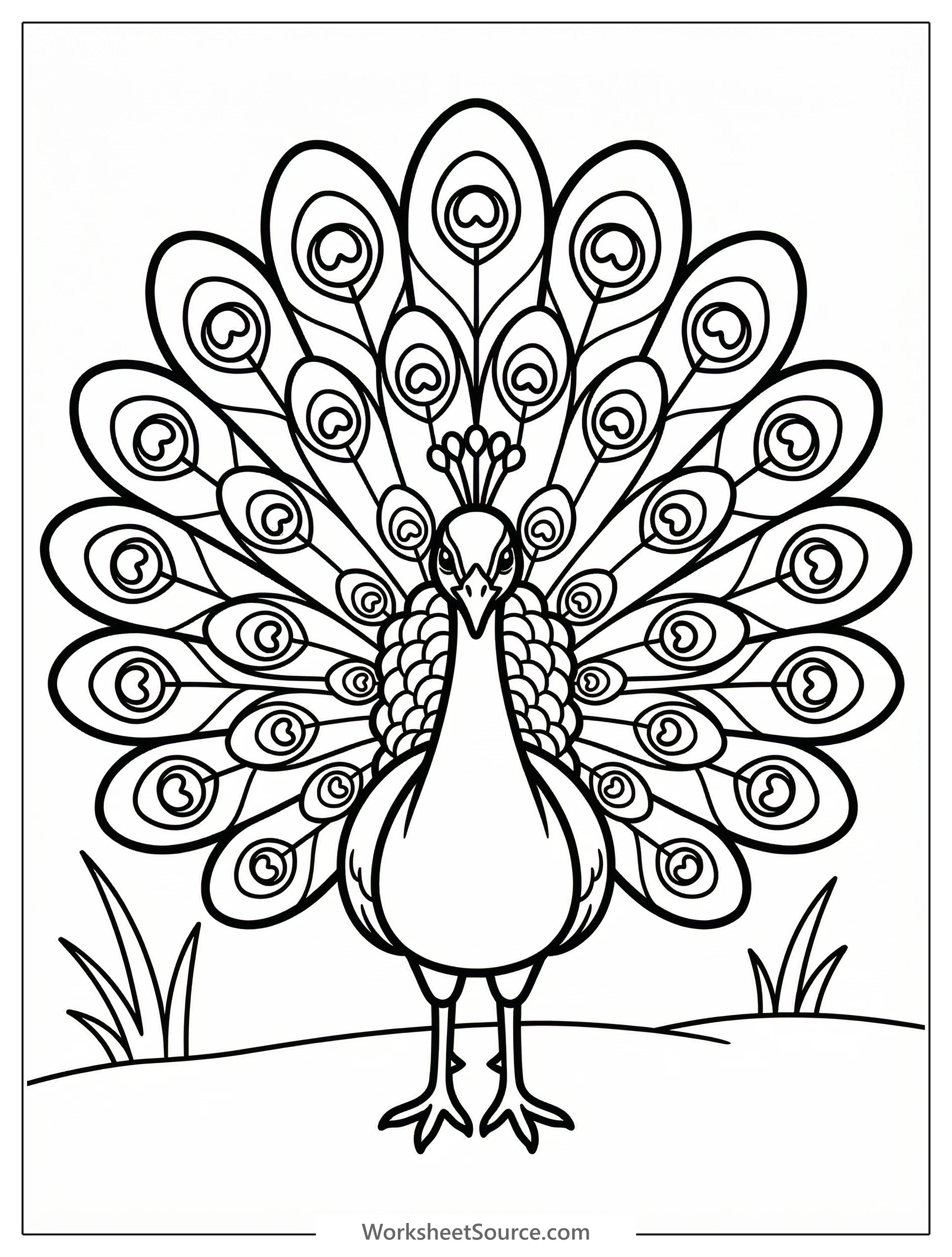
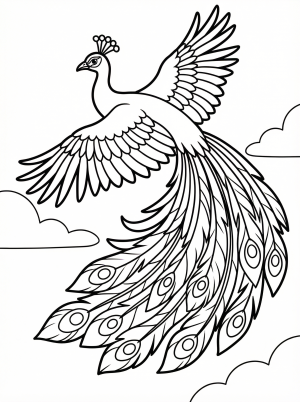
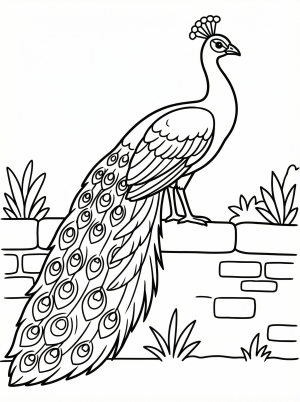
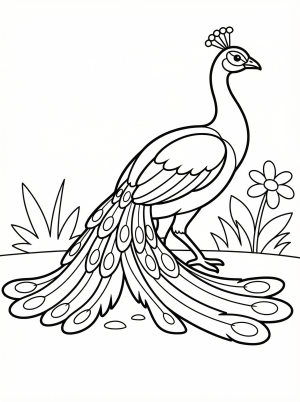
Spark creativity with a vibrant peacock feather coloring page. Enhance fine motor skills and learn about nature's beauty through engaging artistic fun. Perfect for young learners.
Instant AccessGet the PDF
- Resolution
- 300 DPI
- Difficulty
- Easy
Educator's Guide & Activity Ideas
Did you know that the shimmering, iridescent colors on a peacock's tail aren't actually pigments? Instead, these magnificent feathers have tiny, microscopic structures that reflect light in a special way, creating the dazzling blues, greens, and purples we see. Each feather is a marvel of nature's design, featuring remarkable eye spots that seem to watch you. These are used by peacocks to attract mates and even ward off predators with their impressive display.
Engaging with detailed animal art, especially beautiful peacock feathers, offers wonderful developmental advantages for young learners. As children carefully choose colors and fill in the intricate patterns of the eye spots and feather strands, they are actively refining their fine motor skills and hand-eye coordination. This creative process also encourages color recognition, develops artistic expression, and boosts concentration, all while fostering an appreciation for the natural world and its incredible diversity. It is a joyful way to combine art and learning.
For educators, integrating this activity into a science lesson about birds or animal adaptations provides a fantastic visual aid. Encourage discussions about how animals use their features for survival. At home, parents can transform coloring into a fun game called 'Color Safari.' Ask your child to find objects around the house that match the vibrant colors chosen for the peacock. For example, they could find something blue like the feather's sheen or green like its rich hues. This makes learning about colors an interactive and memorable experience, extending beyond the page and igniting curiosity.
Curriculum Standard Alignment
This activity supports early science literacy by exploring animal biology and pattern recognition, while enhancing fine motor development crucial for prewriting skills and self expression.
Discussion Starters for Teachers & Parents
What colors do you imagine a real peacock's feathers would be, and why do you think they are so bright and colorful?
If you were a scientist studying peacocks, what is one surprising thing you would want to learn about their tails?
How do you think these beautiful feathers help the peacock in the wild, perhaps by attracting friends or keeping safe?
Coloring Tips & Techniques
Explore a rainbow of hues for the shimmering feather strands, perhaps starting with emerald greens and sapphire blues. Imagine where the sunlight might hit the eye spot to add bright, glowing yellows and oranges for a dazzling effect. Try blending different shades of purple and gold around the center to make it truly pop.
Educational Milestones
- Fine Motor PrecisionRefines small muscle movements in the hands and fingers, essential for writing readiness.
- Spatial AwarenessHelps children understand boundaries, lines, and shapes in a structured environment.
Recommended For
Preschool & Elementary Learners
Frequently Asked Questions
Our Quality Guarantee to Educators
We believe classroom resources should be high-quality and stress-free. Every worksheet on WorksheetSource is personally printed and tested by our team to ensure it fits standard 8.5" x 11" paper with clean, sharp outlines.
Classroom & Personal Use
Yes! All our coloring pages are free for personal, classroom, and homeschool use. Print as many as you need.
Paper & Print Sizes
Every design is formatted for US Letter (8.5 x 11"). We recommend printing at 100% scale for best line crispness.
Digital Tablet Use
Absolutely. Our PDFs work perfectly in digital coloring apps like Procreate, GoodNotes, and similar tablet software.