
Valentines Coloring Pages
Celebrate love and learning with our exquisite collection of free printable Valentine's Day coloring pages. These thoughtfully designed resources offer more than just creative expression; they are powerful tools for developing crucial cognitive and motor skills in an engaging, festive environment.
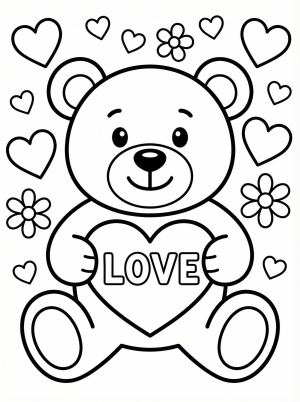
Discover more Seasons & Holidays themes
Continue your creative journey with these other popular collections within the Seasons & Holidays archive.
Educator's Guide to Valentines Coloring Pages
The Educational Power of Valentine's Day Coloring Pages
Valentine's Day, a cherished occasion celebrating affection, offers significant educational opportunities beyond simple festivity. Engaging with Valentine's themed coloring pages allows children to explore the holiday's historical roots, learning how symbols like hearts, cupids, and flowers evolved into universal expressions of love and friendship. This introduction to cultural literacy provides a gentle way to discuss the evolution of customs and traditions, while the act of coloring these specific images inherently supports the development of essential cognitive skills, fostering recognition of thematic elements associated with connection and celebration.
These activities are profoundly beneficial for social emotional learning. Children can use the pages as a springboard for conversations about kindness, empathy, and what it means to care for others, discussing who they might give a colored page to or the message they wish to convey. This encouragement to articulate feelings cultivates emotional intelligence and reinforces positive social behaviors, helping children express affection in healthy and constructive ways. The therapeutic nature of coloring further provides a calm space for reflection and emotional processing, particularly valuable for young learners navigating social dynamics.
From a developmental standpoint, the intricate designs often found in Valentine's pages significantly enhance fine motor skills. Precisely coloring within lines, selecting appropriate colors, and manipulating crayons or pencils all contribute to improved hand eye coordination and dexterity. This strengthens the small muscles in the hands and wrists, crucial for later academic tasks such as writing and drawing. Moreover, choosing colors and completing a page encourages decision making, problem solving, and instills a sense of accomplishment, boosting self esteem and promoting a positive attitude towards creative learning.
Classroom & Home Learning Ideas
Integrating Valentine's Day coloring pages into structured learning environments can transform a simple art activity into a comprehensive educational experience. One creative approach involves using finished pages as visual aids for storytelling. Children can select their favorite colored sheet and invent a short narrative focusing on friendship or generosity. This activity nurtures imagination, verbal expression, and helps develop sequencing skills and basic story structure.
Educators might consider incorporating these pages into a lesson on vocabulary building. Before coloring, children can identify and name objects such as hearts or flowers. Afterward, they can write or dictate descriptive words related to their chosen colors or the emotions evoked, expanding their active vocabulary. Another engaging activity involves creating personalized Valentine's Day cards or gifts; children can color a page, then cut out elements to paste onto cardstock, fostering pride in their creations while practicing cutting skills.
Furthermore, these coloring pages can become components of a larger decorative project. A class or family could color multiple pages and then assemble them into a communal display or a festive banner. This collaborative effort encourages teamwork and shared responsibility, providing a tangible outcome that celebrates collective creativity. Teachers might also use the pages to introduce basic patterns or symmetry, asking children to identify repeating elements or to color opposite sides of an image in a mirror like fashion, subtly reinforcing early mathematical concepts in an artistic context.
Artistic Development with Valentine's Themes
Elevating the coloring experience beyond simple line filling significantly advances a child's artistic development, even with Valentine's themed pages. One professional tip for young artists is to encourage experimentation with color blending. Guide them to layer two different shades, such as a light pink over a deeper red, to create a new, nuanced hue. This technique introduces color mixing and demonstrates how colors interact to produce depth and visual interest, moving beyond flat applications.
Another sophisticated approach involves teaching basic shading techniques. Even simple objects like a heart can gain dimension when a slightly darker shade is applied along one edge or corner, suggesting a light source. While this concept might be advanced for very young children, introducing it gradually by suggesting "shadow" areas can improve their understanding of form and volume. Encourage them to observe how light falls on real objects to better inform their artistic choices, fostering a keener eye for detail and perception.
Furthermore, exploring different textures can enrich the artistic outcome. Suggest using varying pressures with crayons to create rougher or smoother surfaces, or perhaps incorporating alternative art media such as watercolor pencils for soft washes, or oil pastels for vibrant, dense coverage. This exposure to diverse tools expands their artistic repertoire, helping them understand how different materials achieve distinct visual effects. Children can also be encouraged to add their own creative elements to the pages, such as drawing small patterns within larger shapes or adding embellishments, thereby personalizing their artwork and developing unique artistic voices.
Expert Teaching Tips
- 1Encourage discussions about love and friendship, linking colors to emotions and personal connections.
- 2Suggest using diverse art materials like crayons, markers, or pastels for varied textures and sensory exploration.
- 3Guide children to experiment with color blending to create new shades and visual depth within their artwork.
- 4Transform finished pages into heartfelt cards or classroom decorations, fostering pride and purpose in their creations.
- 5Focus on proper pencil grip and sustained attention to detail, enhancing fine motor control and concentration.
Our Quality Commitment
We personally print and test every valentines design. We guarantee crisp, bold lines optimized for 8.5" x 11" paper.
Frequently Asked Questions
What are some ways to make Valentine's Day coloring educational for young children?
To enhance educational value, encourage children to identify and name Valentine's Day symbols like hearts, flowers, and cupids on their pages. Discuss the meaning of these symbols, practice color recognition by naming the colors they use, and engage them in conversations about kindness, friendship, and expressing affection. You can also ask them to count objects on the page or describe patterns, integrating early math and descriptive language skills.
How do these Valentine's Day coloring activities specifically benefit a child's development?
Valentine's Day coloring pages offer multiple developmental benefits. They significantly boost fine motor skills and hand eye coordination as children carefully color within lines and manipulate their art tools. Cognitively, they promote color recognition, pattern identification, and can serve as a creative outlet for storytelling and vocabulary expansion. Emotionally, these activities provide a calm space for self expression and can spark conversations about social emotional learning, such as empathy, sharing, and understanding feelings related to love and friendship.