
Skeletons Coloring
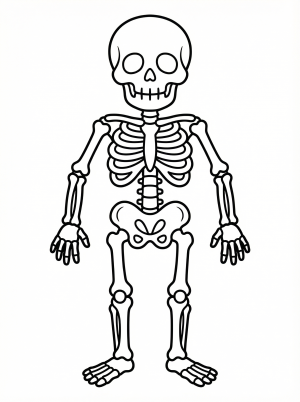
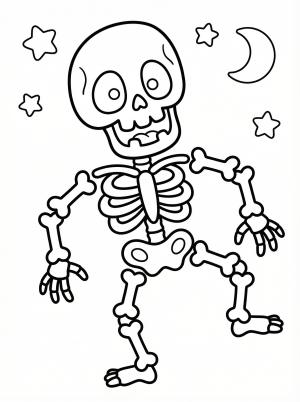
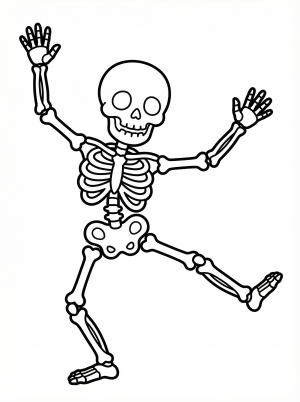
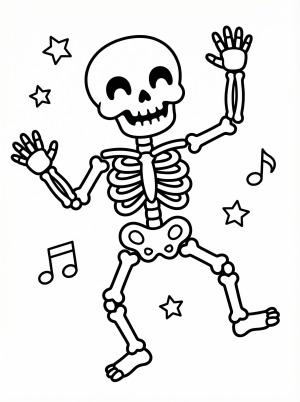
Unlock a world of discovery with our meticulously crafted skeleton coloring pages. These engaging resources provide a unique blend of artistic expression and foundational anatomical learning, perfect for inquisitive young minds. Explore the marvels of the human body in an accessible and exciting way.




Discover more Halloween themes
Continue your creative journey with these other popular collections within the Halloween archive.

Educator's Guide to Skeletons Coloring Pages
The Educational Power of Skeletons Exploring the skeletal system offers children a fascinating gateway into understanding their own bodies and the natural world. Our skeleton, a complex framework of bones, provides essential support, protects vital organs, and enables movement, making it a cornerstone of human biology. Through coloring, young learners can begin to visualize the intricate structure of the skull, the protective cage of the ribs, and the long bones of the limbs, transforming abstract concepts into tangible images. This hands on approach fosters an early appreciation for biology, encourages questions about how our bodies work, and lays a fundamental groundwork for future science education. Furthermore, understanding the skeleton’s role can inspire discussions about health, nutrition, and the importance of physical activity, linking classroom learning to everyday life. These pages serve not merely as coloring activities but as powerful educational tools designed to ignite curiosity about anatomy and physiology, promoting a deeper connection with scientific principles.
Classroom & Home Learning Ideas Teachers and parents possess numerous creative avenues for integrating these skeleton coloring pages into comprehensive learning experiences. One engaging activity involves inviting children to label major bones after they have completed their coloring sheets, reinforcing anatomical vocabulary such as 'skull,' 'rib cage,' and 'femur.' Furthermore, teachers and parents might encourage a fascinating comparative study, where children color a human skeleton and then research and sketch the skeleton of an animal, highlighting similarities and differences in structure and function. Another creative application involves using these pages as a springboard for imaginative storytelling or descriptive writing, prompting children to invent a story about what it would be like if their bones could change colors or how a skeleton helps a favorite character move. These versatile resources also serve admirably as illustrative backdrops for science fair presentations or as components in a larger unit on the human body, providing visual anchors for complex biological information. Finally, completing a skeleton puzzle after coloring individual bone sections can significantly enhance spatial reasoning and problem solving skills, transforming learning into an interactive quest.
Artistic Development The act of coloring a skeleton page offers significant opportunities for artistic growth and the refinement of fine motor skills. To elevate artistic skill, children can experiment with various shading techniques, using lighter and darker tones of a single color to create the illusion of depth and three dimensionality, making the bones appear more realistic or sculptural. Achieving a degree of realism is possible by exploring subtle variations in off white or cream hues, perhaps with touches of grey or brown to mimic natural bone textures and shadows. For those seeking imaginative freedom, deliberately choosing vibrant, non traditional colors for individual bones can transform the anatomical study into an abstract art piece while still requiring careful attention to form and outline. Ultimately, the meticulous act of coloring within the lines significantly refines fine motor skills, hand eye coordination, and concentration, all critical components of artistic development and academic readiness. Encouraging children to observe genuine skeletal diagrams before or during coloring can further inform their artistic choices, blending observational learning with creative expression.
Coloring Tips & Techniques
- 1Encourage children to name each bone as they color it, building early anatomical vocabulary.
- 2Discuss the protective function of the skull and rib cage while coloring those specific sections.
- 3Challenge kids to compare the human skeleton to an animal skeleton, highlighting similarities and differences.
- 4Integrate a simple lesson on bone health, discussing the importance of calcium and vitamin D.
- 5Prompt imaginative thinking by asking, 'What would life be like if we didn't have bones?'
Our Quality Guarantee to Educators
We believe classroom resources should be high-quality and stress-free. Every worksheet on WorksheetSource is personally printed and tested by our team to ensure it fits standard 8.5" x 11" paper with clean, sharp outlines.
Frequently Asked Questions
What are skeletons made of for kids?
Skeletons are primarily made of bones, which are living tissues containing minerals like calcium and phosphorus, as well as living cells and marrow. These components work together to make our bones strong yet light, allowing us to move, providing support for our bodies, and protecting our internal organs.
How do these coloring pages help with my child's development?
These skeleton coloring pages offer numerous developmental benefits, including enhancing fine motor skills and hand eye coordination as children carefully color within the lines. They also introduce fundamental anatomical vocabulary, foster cognitive understanding of basic biology, and stimulate creativity and imaginative thinking through artistic expression. Furthermore, they can serve as excellent tools for improving focus and concentration.
Skeletons Coloring in English