
Pterodactyl Catching Fish Printable
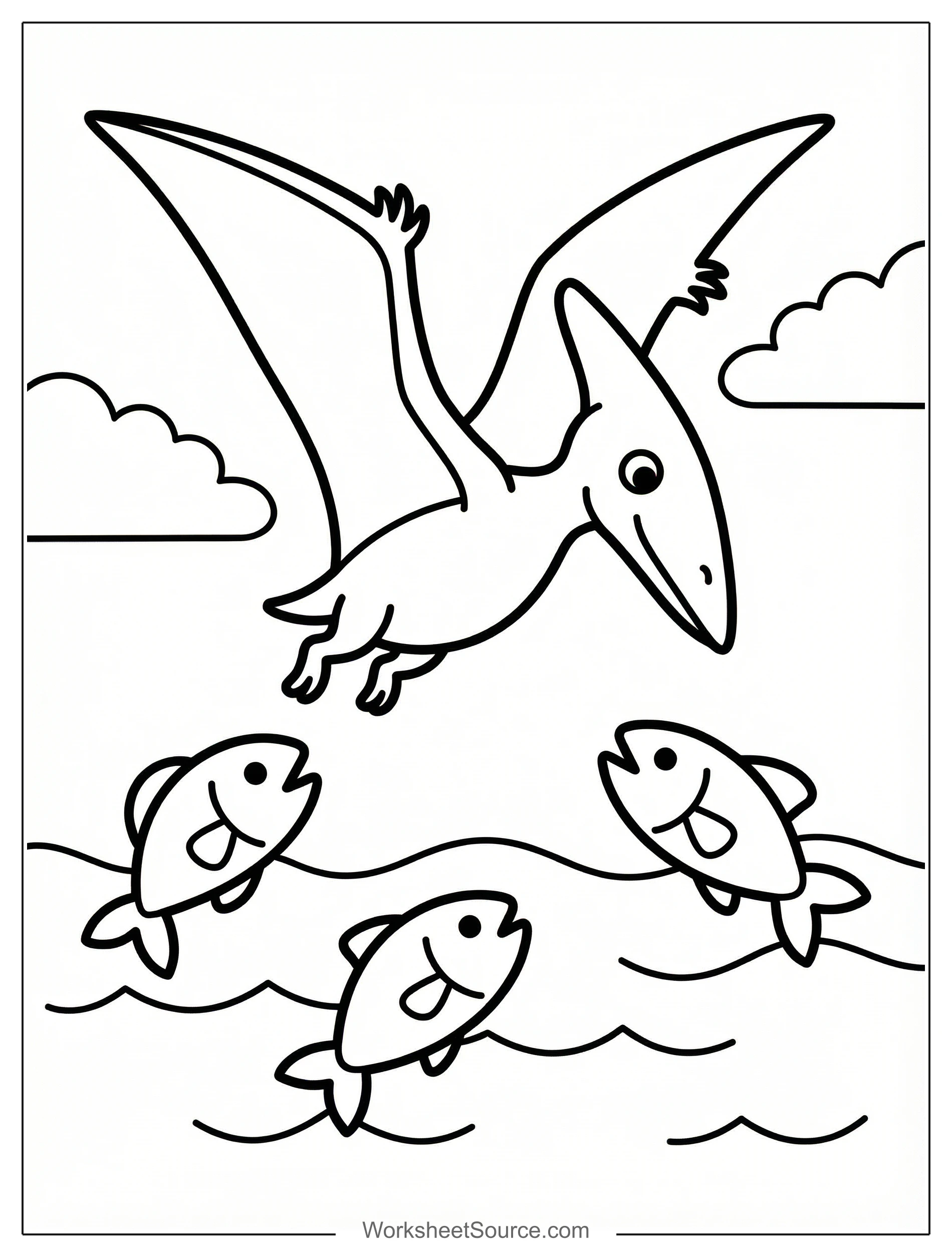
Discover prehistoric wonders with this engaging pterodactyl coloring page. Children will develop fine motor skills and creativity as they explore ancient flying reptiles in the act of catching fish.
Instant AccessGet the PDF
- Resolution
- 300 DPI
- Difficulty
- Easy
Educator's Guide & Activity Ideas
Pterosaurs, fascinating flying reptiles from the Mesozoic Era, were master hunters of the ancient skies, perfectly adapted for aerial predation. Unlike birds, their wings were formed by a membrane of skin, muscle, and other tissues stretching from their ankles to a dramatically elongated fourth finger. Many species, including the fish-eating pterodactyls, possessed long, pointed beaks and sharp teeth, ideal for snatching slippery prey from the water's surface. These adaptations showcase their incredible hunting skills and highlight their important role within the prehistoric food web.
Engaging with dinosaur-themed coloring pages offers numerous developmental benefits for children. Beyond fostering artistic expression, this activity significantly enhances fine motor skills, hand-eye coordination, and concentration as they carefully select colors and strive to stay within the lines. Learning about creatures like the pterodactyl also sparks curiosity about science, paleontology, and natural history, introducing new vocabulary and concepts, such as adaptation, habitats, and ancient ecosystems, in an accessible and exciting way. Ultimately, this activity provides a calm, focused outlet for imagination and intellectual exploration.
For teachers, this page can be integrated into a 'Prehistoric Prowess' science unit within the classroom. Students can research various pterosaur diets and then color the page, labeling the pterodactyl's adaptations for catching fish. As a home-learning game for parents, after coloring, suggest a 'Dinosaur Food Chain' activity. Children can draw or describe other animals that might have eaten the fish, or what might have preyed on the pterodactyl itself. This activity actively encourages critical thinking about ecosystems and predator-prey relationships.
Curriculum Standard Alignment
This page supports early learning standards in life science by introducing ancient ecosystems and animal adaptations, and fine motor skill development through intricate coloring and visual arts engagement.
Discussion Starters for Teachers & Parents
What do you think made the pterodactyl a good hunter of fish, and what tools or features did it use to catch its prey?
If you could give the pterodactyl different colors, which colors would you choose and why? How might those colors help it in its environment?
Imagine you are a scientist studying this pterodactyl. What clues in the picture tell you about where it lives or what it likes to eat?
Coloring Tips & Techniques
Encourage young artists to explore naturalistic tones, such as earthy browns and grays, for the pterodactyl. Contrast these with cool ocean blues and greens for the water. Suggest adding subtle shadows under the wings and on the water's surface to create a compelling sense of depth and movement.
Educational Milestones
- Fine Motor PrecisionRefines small muscle movements in the hands and fingers, essential for writing readiness.
- Spatial AwarenessHelps children understand boundaries, lines, and shapes in a structured environment.
Recommended For
Preschool & Elementary Learners
Frequently Asked Questions
Our Quality Guarantee to Educators
We believe classroom resources should be high-quality and stress-free. Every worksheet on WorksheetSource is personally printed and tested by our team to ensure it fits standard 8.5" x 11" paper with clean, sharp outlines.
Classroom & Personal Use
Yes! All our coloring pages are free for personal, classroom, and homeschool use. Print as many as you need.
Paper & Print Sizes
Every design is formatted for US Letter (8.5 x 11"). We recommend printing at 100% scale for best line crispness.
Digital Tablet Use
Absolutely. Our PDFs work perfectly in digital coloring apps like Procreate, GoodNotes, and similar tablet software.