
Candy Canes Coloring
Step into a world of festive wonder and educational discovery with our exquisite collection of candy cane coloring pages. Far more than just a seasonal treat, these iconic symbols offer a vibrant gateway to exploring history, art, and essential developmental skills, perfect for young learners and creative minds alike.
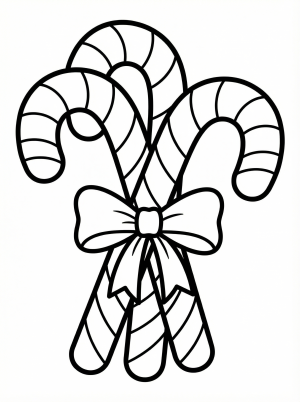
Discover more Christmas themes
Continue your creative journey with these other popular collections within the Christmas archive.



Educator's Guide to Candy Canes Coloring Pages
The Educational Power of Candy Canes Candy canes, with their iconic stripes and delightful peppermint flavor, offer a surprising depth of educational opportunity extending far beyond simple holiday ornamentation. Tracing their origins back to 17th century Germany, where a choirmaster at the Cologne Cathedral is said to have bent sugar sticks into a shepherd's crook shape to quiet children during long Nativity services, these treats carry a rich historical narrative. This historical journey provides a wonderful opportunity for children to explore cultural traditions and the evolution of simple objects over time, fostering an appreciation for history and storytelling. Furthermore, the candy cane is replete with symbolic meaning, often explained as representing various aspects of Christian faith, such as the white symbolizing purity, the red signifying sacrifice, and the three thin stripes denoting the Holy Trinity. Even the J shape can be interpreted as standing for Jesus or a shepherd's crook, connecting to biblical narratives. Engaging with these stories helps children develop cultural awareness and appreciate the deeper meanings behind familiar objects. Beyond these cultural and historical insights, the act of coloring itself contributes significantly to a child's developmental milestones. Precisely maneuvering coloring tools within the lines of a candy cane illustration strengthens fine motor skills, which are crucial for handwriting and other daily tasks. This activity also enhances hand eye coordination, promotes focused attention, and encourages color recognition, providing a calming and engaging creative outlet.
Classroom & Home Learning Ideas These festive candy cane coloring pages serve as an excellent foundation for a myriad of engaging learning activities in both classroom and home environments. One creative approach involves using the completed artwork as a springboard for imaginative storytelling, where children might invent tales about their candy cane's adventures or its journey from a candy factory to a festive tree. Another beneficial activity is pattern exploration, where young learners can meticulously observe the alternating red and white stripes, then perhaps design their own unique color patterns using other hues, thereby reinforcing concepts of sequence and design. Educators might also integrate simple mathematical concepts by having children count the stripes, identify the number of curves in the J shape, or even engage in basic addition and subtraction problems using candy canes as visual aids. Moreover, these pages can spark discussions about different holiday traditions around the world, prompting research into other festive treats and their cultural significance, thus broadening a child's global perspective. Teachers and parents could further incorporate sensory experiences by discussing the peppermint scent and hard texture of real candy canes, linking visual and sensory details.
Artistic Development Utilizing candy cane coloring pages provides a fantastic opportunity to cultivate and refine various artistic skills in young creators. Professionals advise encouraging children to experiment with varying pressures when applying their coloring tools, allowing for lighter shades in some areas and deeper, more vibrant reds in others, thereby introducing the concept of tonal values. Artists might also explore the technique of blending colors, perhaps layering a light red over a white section to create a soft pink hue or achieving a smoother transition between the stripes. Focusing on the precise outlining of the candy cane before filling in the larger areas can significantly improve neatness and control, developing a steady hand and an eye for detail. Furthermore, introducing a range of coloring mediums, such as crayons, colored pencils, markers, or even watercolor paints, can teach children about different textures and the unique effects each material produces. Encouraging the addition of extra details, like drawing delicate swirls, sparkling sprinkles, or festive ribbons around the candy cane, fosters creativity and allows children to personalize their artwork, transforming a simple coloring page into a truly unique artistic expression. These practices collectively build foundational art techniques valuable for future creative endeavors.
Coloring Tips & Techniques
- 1Discuss the unique history and cultural significance of candy canes as children color.
- 2Encourage experimentation with various coloring tools like crayons, markers, or pencils for different textures.
- 3Prompt children to identify and discuss the patterns and colors on the candy cane, perhaps inventing new ones.
- 4Ask open ended questions about what their candy cane would say or do, fostering imaginative storytelling.
- 5Display the finished artwork to celebrate their creativity and provide a sense of accomplishment.
Our Quality Guarantee to Educators
We believe classroom resources should be high-quality and stress-free. Every worksheet on WorksheetSource is personally printed and tested by our team to ensure it fits standard 8.5" x 11" paper with clean, sharp outlines.
Frequently Asked Questions
What is the history behind candy canes and why are they shaped like that?
The candy cane's origins trace back to 17th century Germany. Legend suggests a choirmaster bent sugar sticks into a J shape, or a shepherd's crook, to represent Jesus and shepherds. The iconic red and white stripes and peppermint flavor were added later, each carrying symbolic meanings related to faith and purity.
How do these help with development?
Candy cane coloring pages are excellent for fostering fine motor skills through precise grip and control. They enhance hand eye coordination, promote color recognition, and encourage pattern identification. Furthermore, discussing the symbolism and history stimulates cognitive development, language skills, and cultural awareness in young learners.
Candy Canes Coloring in English