
Pig Head Portrait Printable
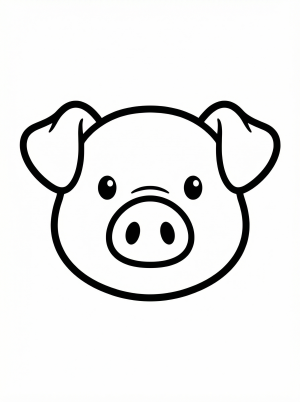
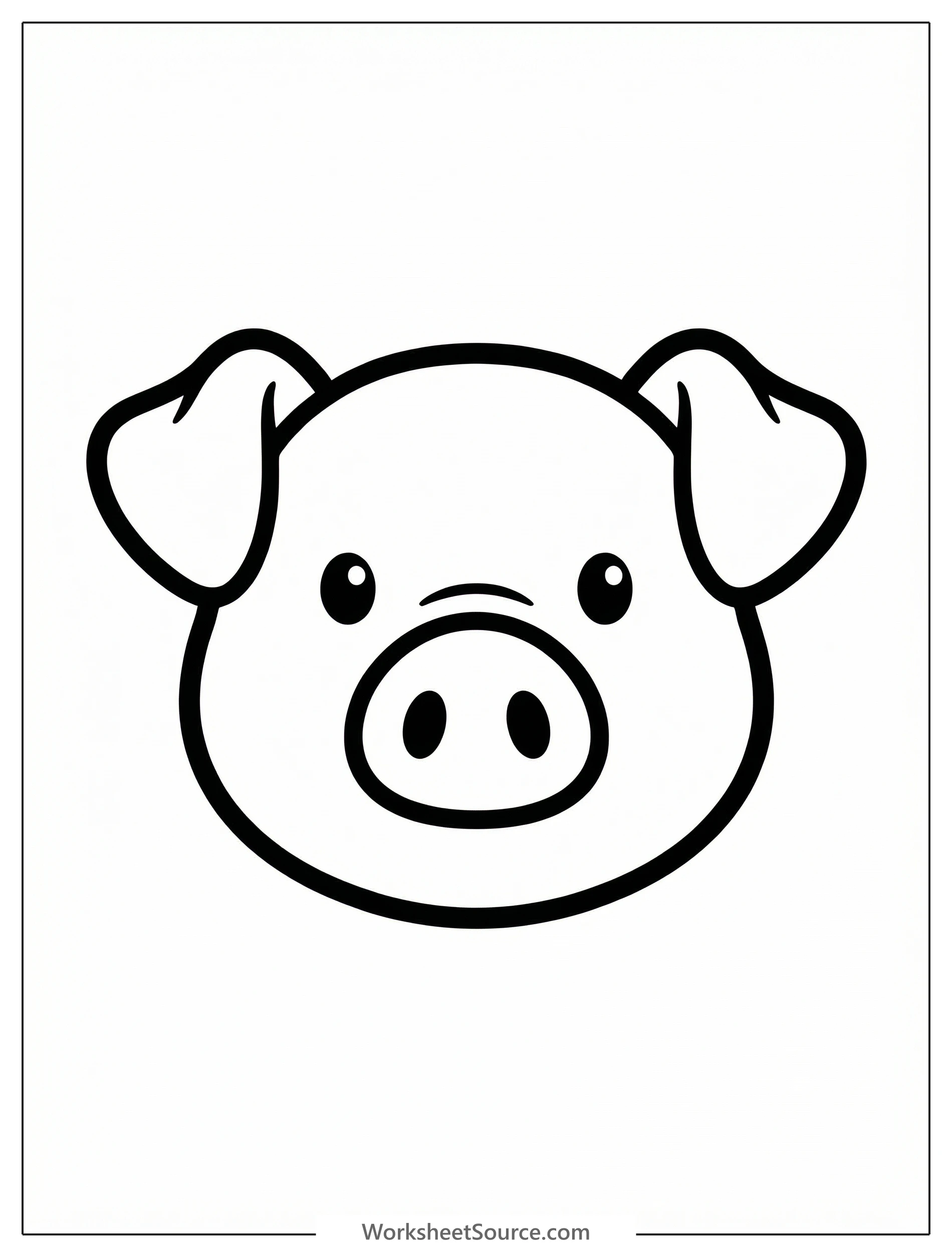
Discover farm animals. Our educational pig head coloring sheet builds fine motor skills, sparks creativity, and teaches basic anatomy through enjoyable artistic expression.
Instant AccessGet the PDF
- Resolution
- 300 DPI
- Difficulty
- Easy
Educator's Guide & Activity Ideas
Pigs possess remarkable intelligence and a highly developed sense of smell, primarily utilizing their unique snout for exploring the world around them. This distinctive feature, along with their mobile ears and keen eyes, allows them to forage efficiently and navigate complex environments, demonstrating a fascinating interplay of sensory organs. Appreciating these core anatomical elements helps young learners understand how specific adaptations enable each animal to thrive uniquely in its habitat, fostering early scientific curiosity about the natural world.
Engaging with detailed line art of an animal's face, such as this clear depiction of a pig, offers a wonderful opportunity for multifaceted developmental growth. The act of carefully coloring the intricate curves of the snout, the distinct contours of the ears, and the precise placement of the small, alert eyes significantly strengthens fine motor skills and enhances crucial hand-eye coordination. Moreover, this focused activity fosters keen observation abilities, encouraging young minds to pay close attention to shapes, proportions, and individual characteristics, all while boosting their spatial reasoning and creative problem-solving abilities.
For educators, integrating such a detailed drawing into a farm animal science unit provides a tangible and engaging visual aid for discussions on animal features, functions, and adaptations within their environment. Teachers might encourage children to identify and name each part of the pig's face, connecting the visual representation to new vocabulary and basic biology concepts. Parents can extend this enriching learning experience at home by encouraging imaginative play and storytelling, perhaps discussing what sounds a pig makes, what it might eat for dinner, or where it might live, thereby further deepening a child's understanding of this fascinating and intelligent farm dweller in a fun, interactive way.
Curriculum Standard Alignment
This page supports early science education through animal biology, enhances fine motor skills development vital for pre-writing, and encourages artistic expression and imaginative thinking.
Discussion Starters for Teachers & Parents
What colors do you think a real pig might be, and why?
If this pig could talk, what do you think it would say about its day?
Look closely at the pig's snout and ears. How do you think these parts help the pig find food or hear things around it?
Coloring Tips & Techniques
Encourage the use of natural shades like soft pinks, warm browns, and earthy grays to bring this pig to life. Experiment with short, bristly strokes to suggest texture on the snout and ears, and consider where a gentle light source might fall to add a sense of roundness to the features.
Educational Milestones
- Fine Motor PrecisionRefines small muscle movements in the hands and fingers, essential for writing readiness.
- Spatial AwarenessHelps children understand boundaries, lines, and shapes in a structured environment.
Recommended For
Preschool & Elementary Learners
Frequently Asked Questions
Our Quality Guarantee to Educators
We believe classroom resources should be high-quality and stress-free. Every worksheet on WorksheetSource is personally printed and tested by our team to ensure it fits standard 8.5" x 11" paper with clean, sharp outlines.
Classroom & Personal Use
Yes! All our coloring pages are free for personal, classroom, and homeschool use. Print as many as you need.
Paper & Print Sizes
Every design is formatted for US Letter (8.5 x 11"). We recommend printing at 100% scale for best line crispness.
Digital Tablet Use
Absolutely. Our PDFs work perfectly in digital coloring apps like Procreate, GoodNotes, and similar tablet software.